
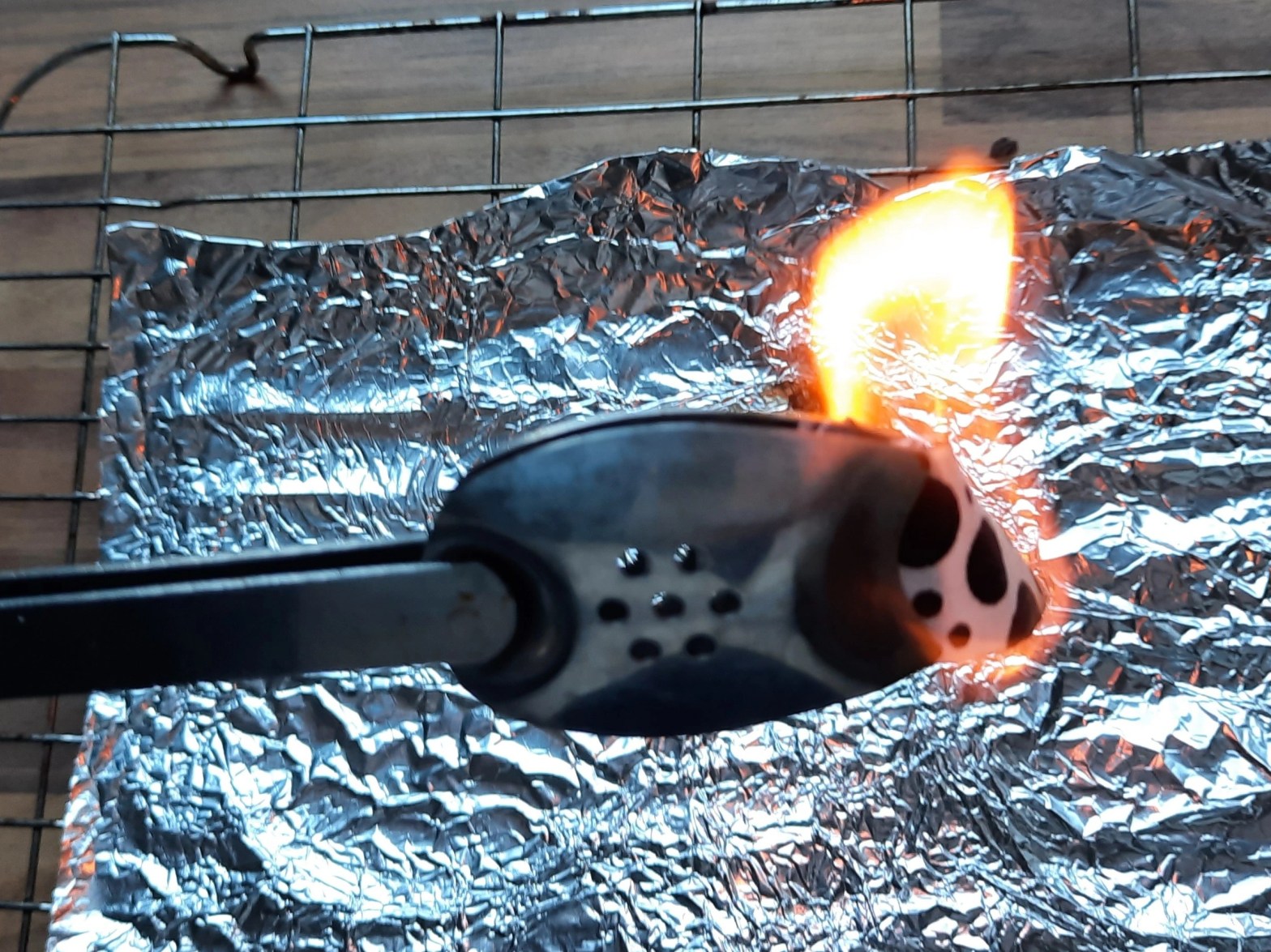
This is a practical post on how to check the fibre content of your fabric by doing a burn test. There are some safety considerations so please read carefully!
For patchwork and quilting you need use fabric which is 100% cotton. Piecing fabric to create a quilt top relies on pressing with a hot iron. Generally speaking, you will press each seam twice: once to ‘set’ the seam (allowing the stitching to settle down into the fabric) and then one to press the seam allowances (either over to one side or open, according to the demands of the pattern you are using). For this you will use an iron on a three dot ‘cotton’ setting. If by any chance you have used a polyester/cotton mix fabric by mistake, the iron will scorch the fabric. Polyester fabric and polyester/cotton mix fabric pieces will not behave in the same way in the quilt top as cotton ones will. The strength of the polyester fibre, which is man-made makes the fabric less malleable than the fibre in the 100% cotton fabric.
If you always buy your fabric off the bolt in a fabric shop, you should have no concerns about the fibre content of your purchase – this will be stated on the end of the bolt. If, however, you like picking up oddments of fabric in sale bins, charity shops or at stash sales, you may need to determine whether you are dealing with 100% cotton fabric or not. This is where the burn test comes in. Different fibres burn in different ways.
To do a burn test on fabric, you will need:
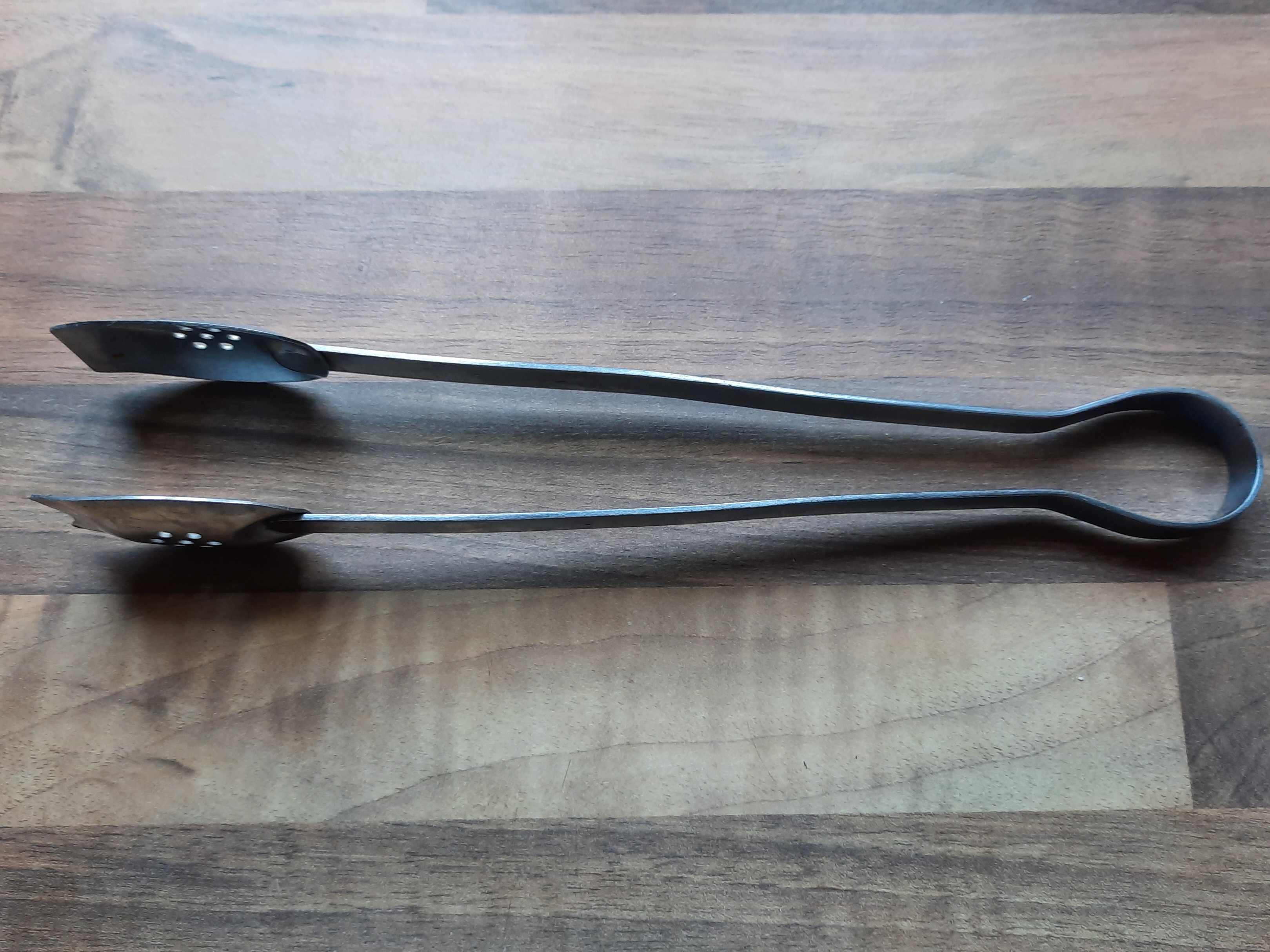
a pair of long-handled metal tongs (these should be ones which are not used for food)
an oven glove
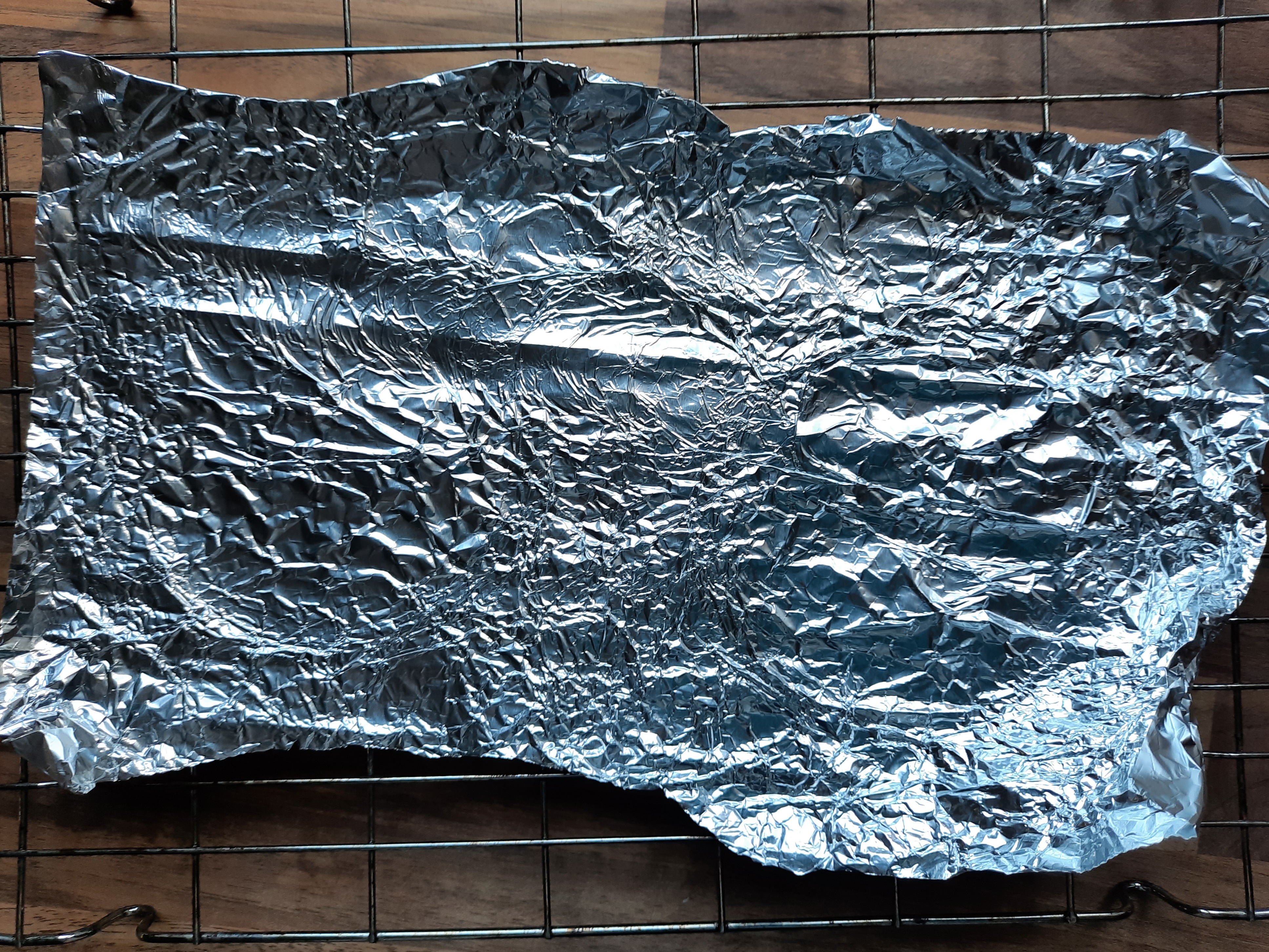
a cooling rack and a large piece of foil
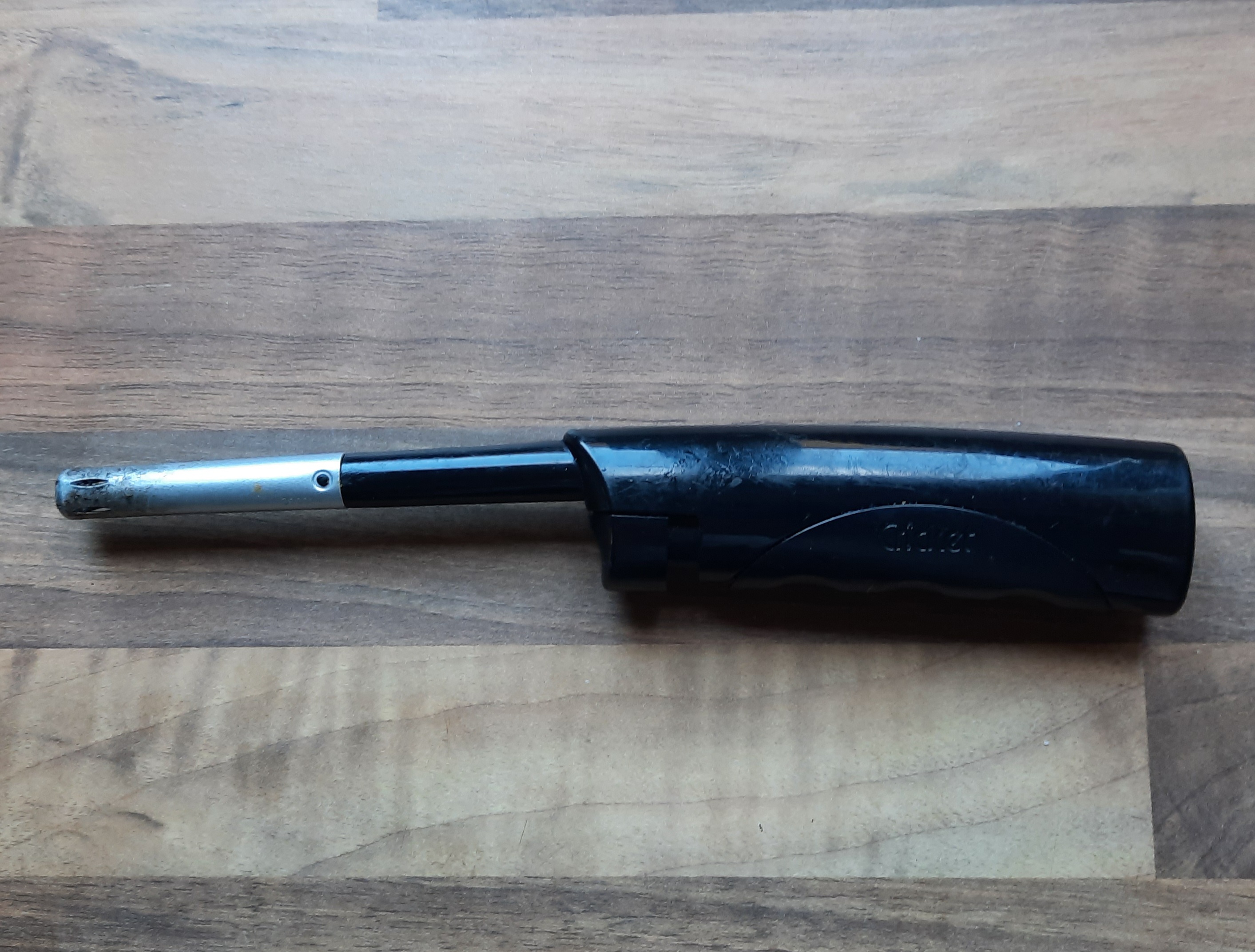
a steady flame, e.g. a lighted candle, a gas hob or barbecue lighter (not a match)
a mask (ideally an industrial-grade mask) to prevent you inhaling toxic fumes from burning synthetic fibres
a SMALL sample of your fabric, say 1 x 3″ Here are the two fabrics I needed to test.
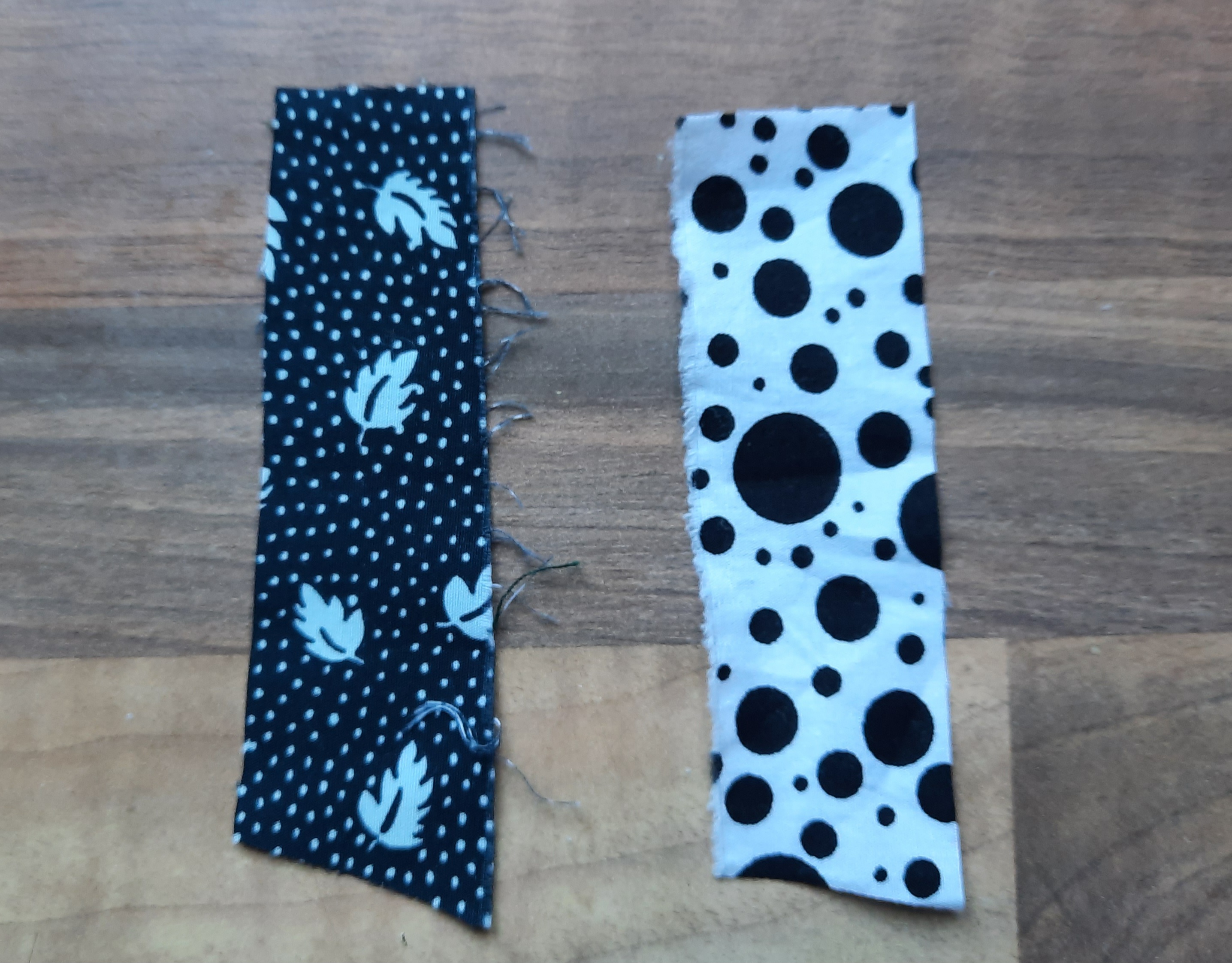
1 With an oven glove on your hand, hold the end of the fabric piece in the tongs.
2 Hold the tongs over the foil spread on the cooling tray.
3 With your other hand, hold the flame briefly to the bottom of the fabric piece.
4 Watch how the fabric burns – cotton will flare up quickly and burn brightly, like a piece of paper.
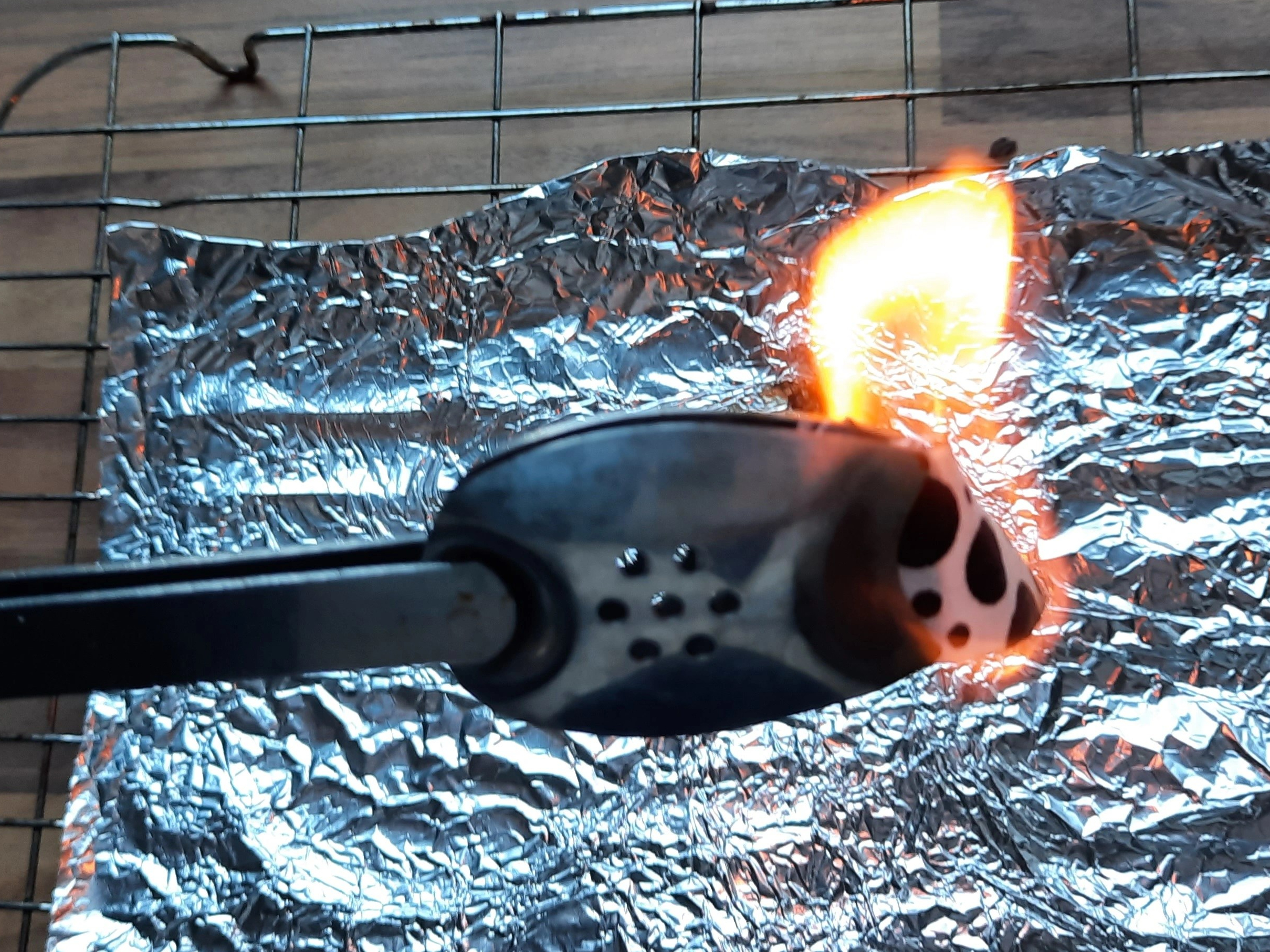
5 Wait until the fabric has finished burning and then drop it onto the foil. (Do not touch either the fabric or the tongs for several minutes.)
6 Examine the ash that has been left. 100% cotton fabric will burn up, leaving very little ash. The ash will be soft and powdery, like this:
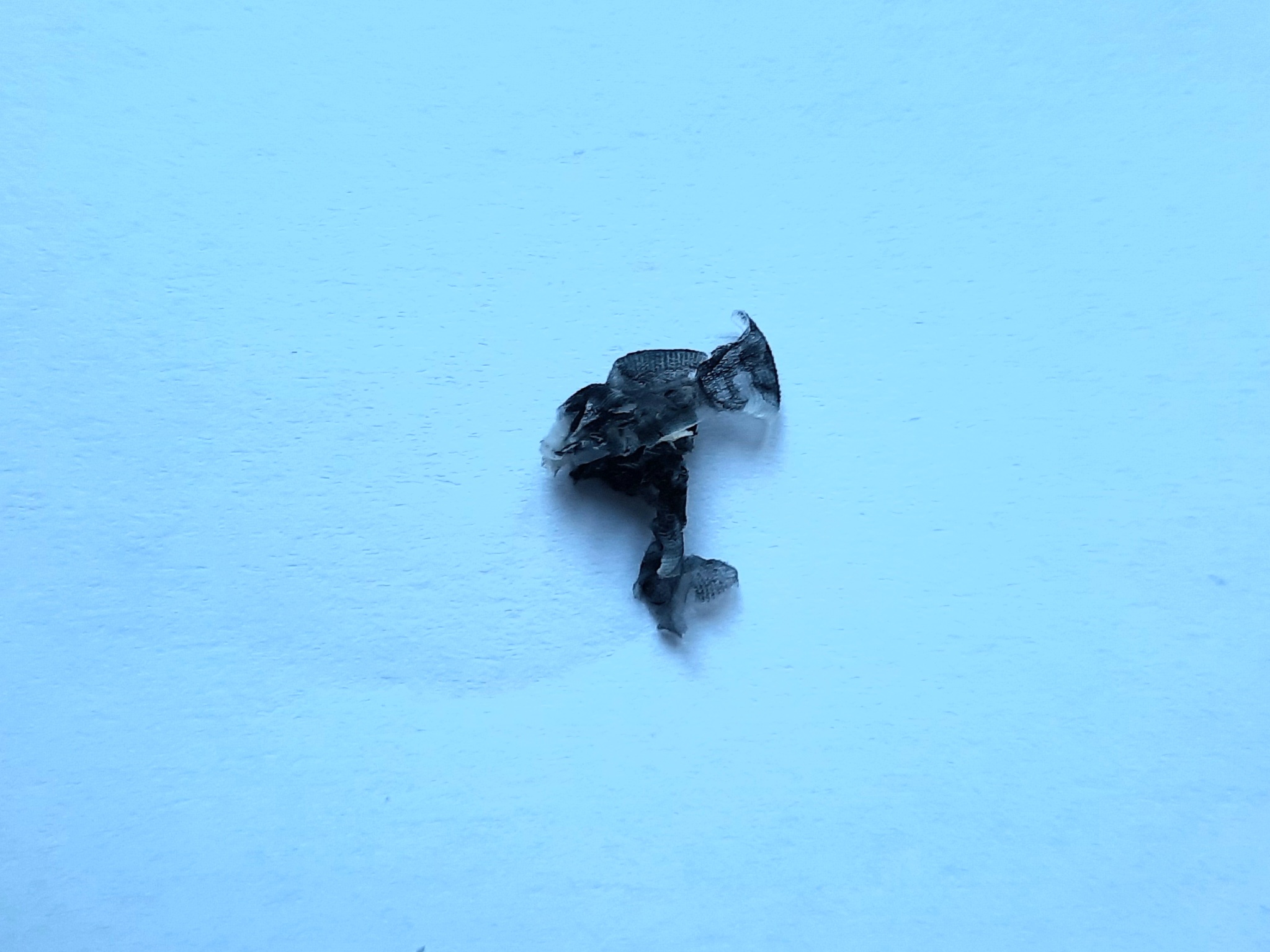
7 The black/white leaf print fabric left ash which was different. It made a stiff, crispy ash which crumbled into fragments when touched. This tells me that the fabric is not 100% cotton but also that it does not contain 100% man-made fibres such as polyester or nylon either. I suspect that some cellulose-based fibres (such as acetate) have been used or added. I decided not to use this fabric in my quilt.
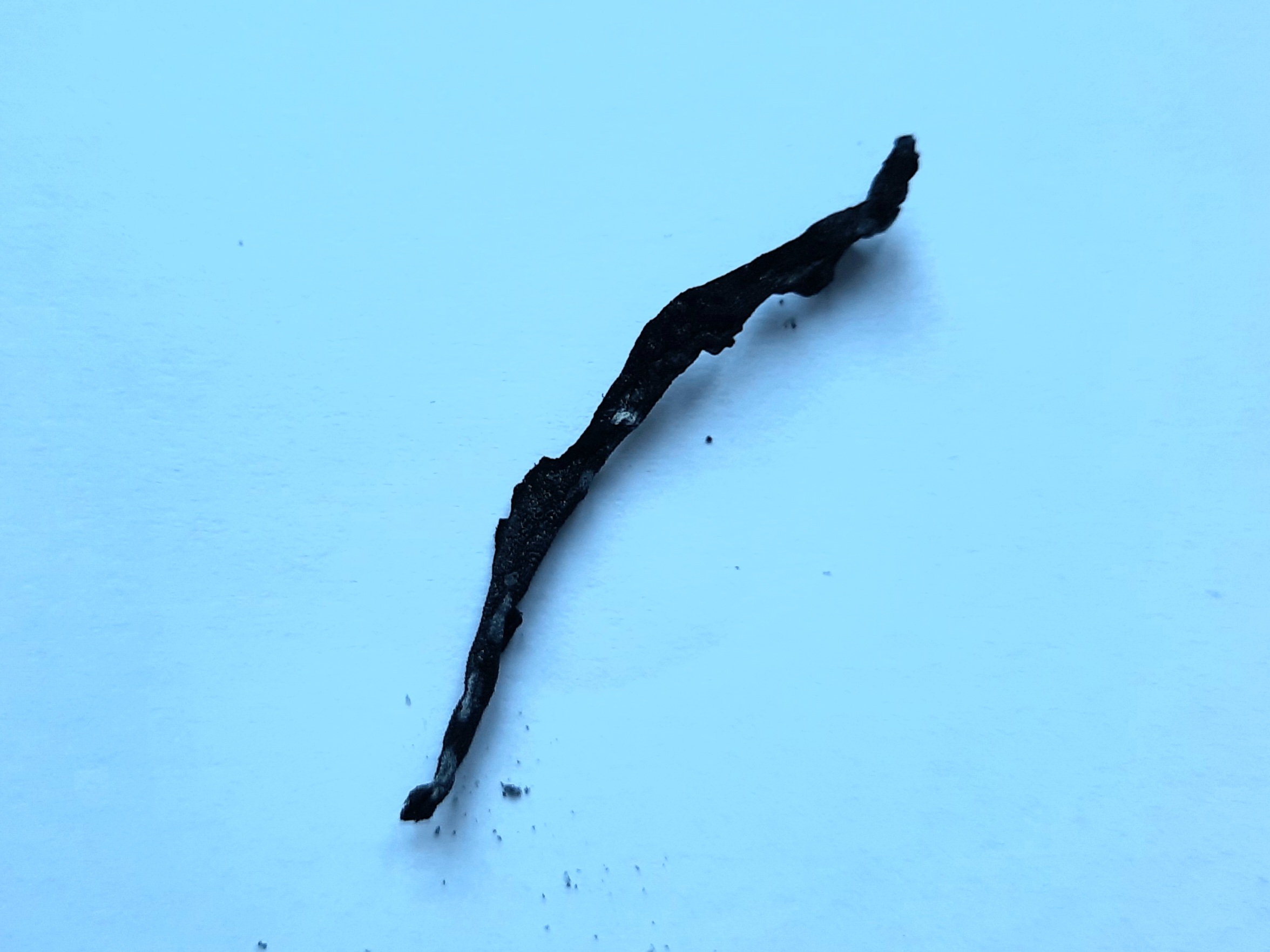
8 As a comparison, here is a piece of 100% polyester ribbon which I also burn tested.
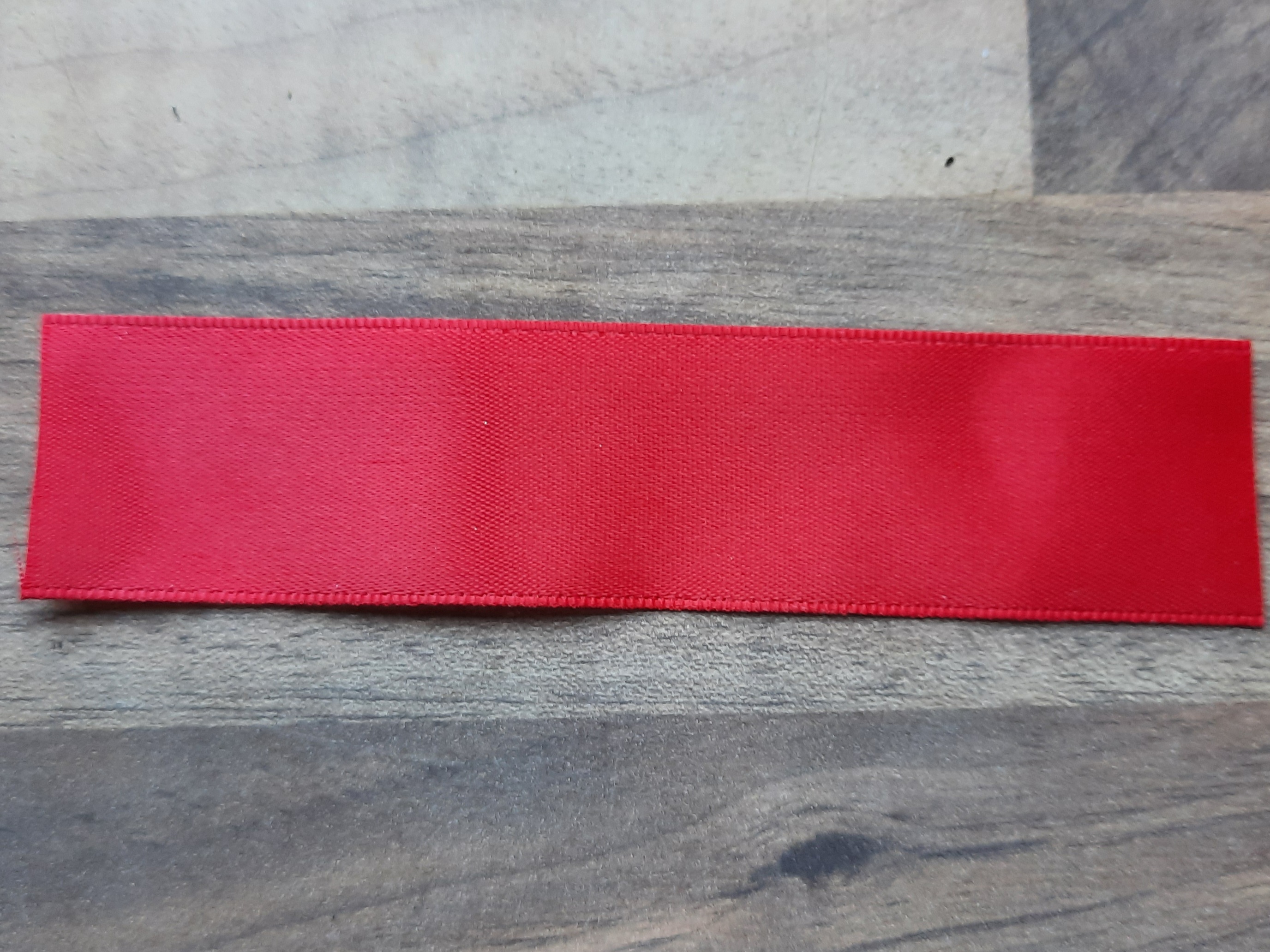
9 When the flame was set to it, the fabric did not burn, it smouldered and melted. This is how the fabric looked after testing – the man-made fibre has formed into hard beads of material.
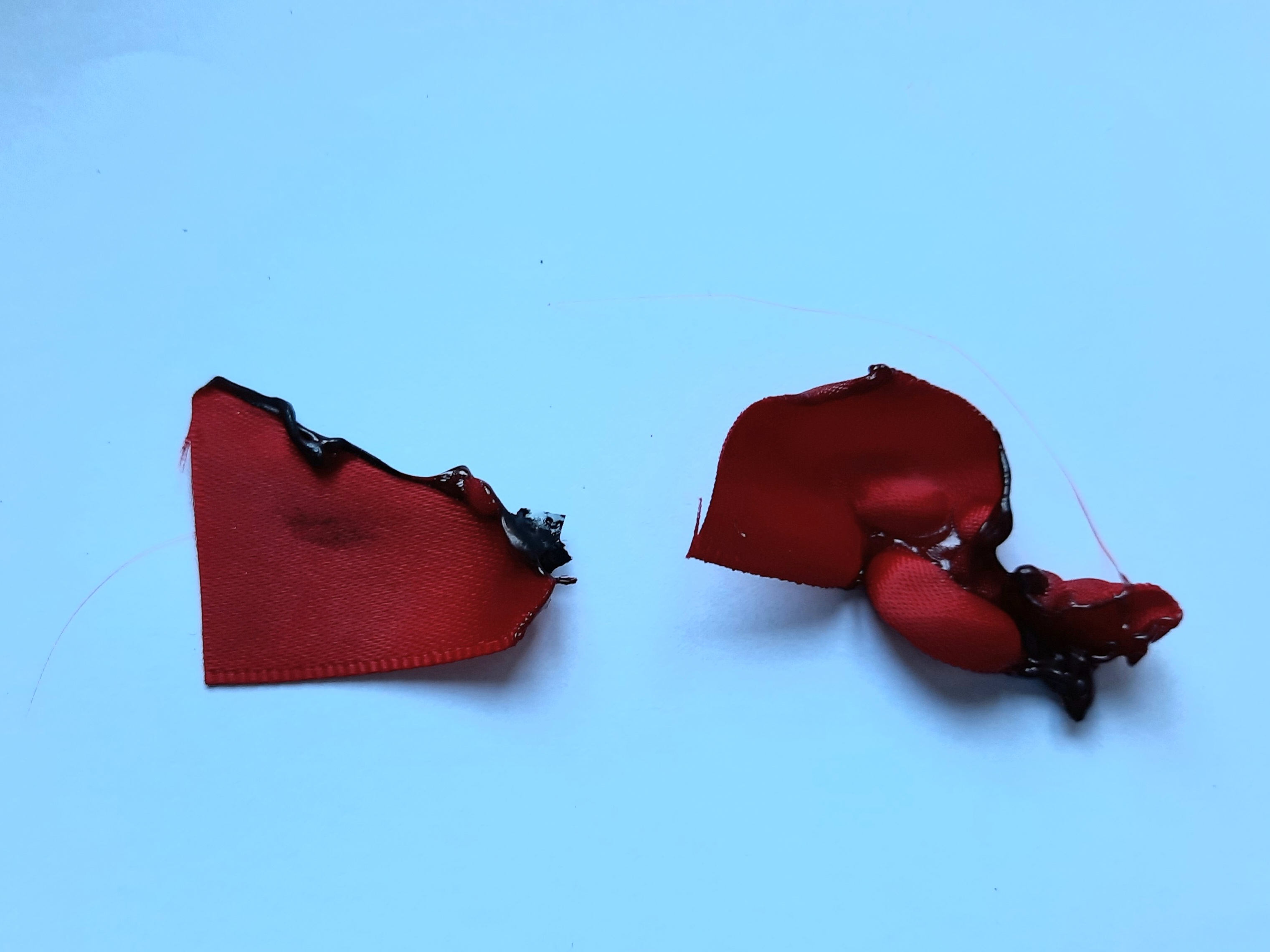
10 Although this is an extreme example, if you test a fabric which is a mixture of cotton and polyester the polyester content will form into beads when the fabric is burnt.
I hope you find this useful when you need to test a mystery fabric. Remember to stick to all the safety rules and only test very small pieces of fabric!
Thank you for reading my blog. Quilt patterns are here, Fabrics are here, Classes are here and quilts for sale here
Click the ‘Follow’ button to get a blog-post by email each Monday and click here if you would like the monthly newsletter with design and colour inspiration, etc.
Today, as I write this blog post, the late September sky is a bright, clear blue. It reminds me of the ‘Flying Beagles in an Azure Sky’. Get the fabric here
 Amanda Jane Textiles