
Last week I was in France, having taken advantage of the January Eurostar ticket sale. I took the Eurostar train from London St Pancras station and arrived in Lille just one hour twenty-five minutes later. I first learned French as a Primary School pupil in a small, rural school at a period in education when it was thought to be helpful to learn a foreign language. The early start was definitely helpful and in the end I studied French (and Spanish) at university. It was very pleasurable to be in France again, to hear French spoken and to use the language myself once more.
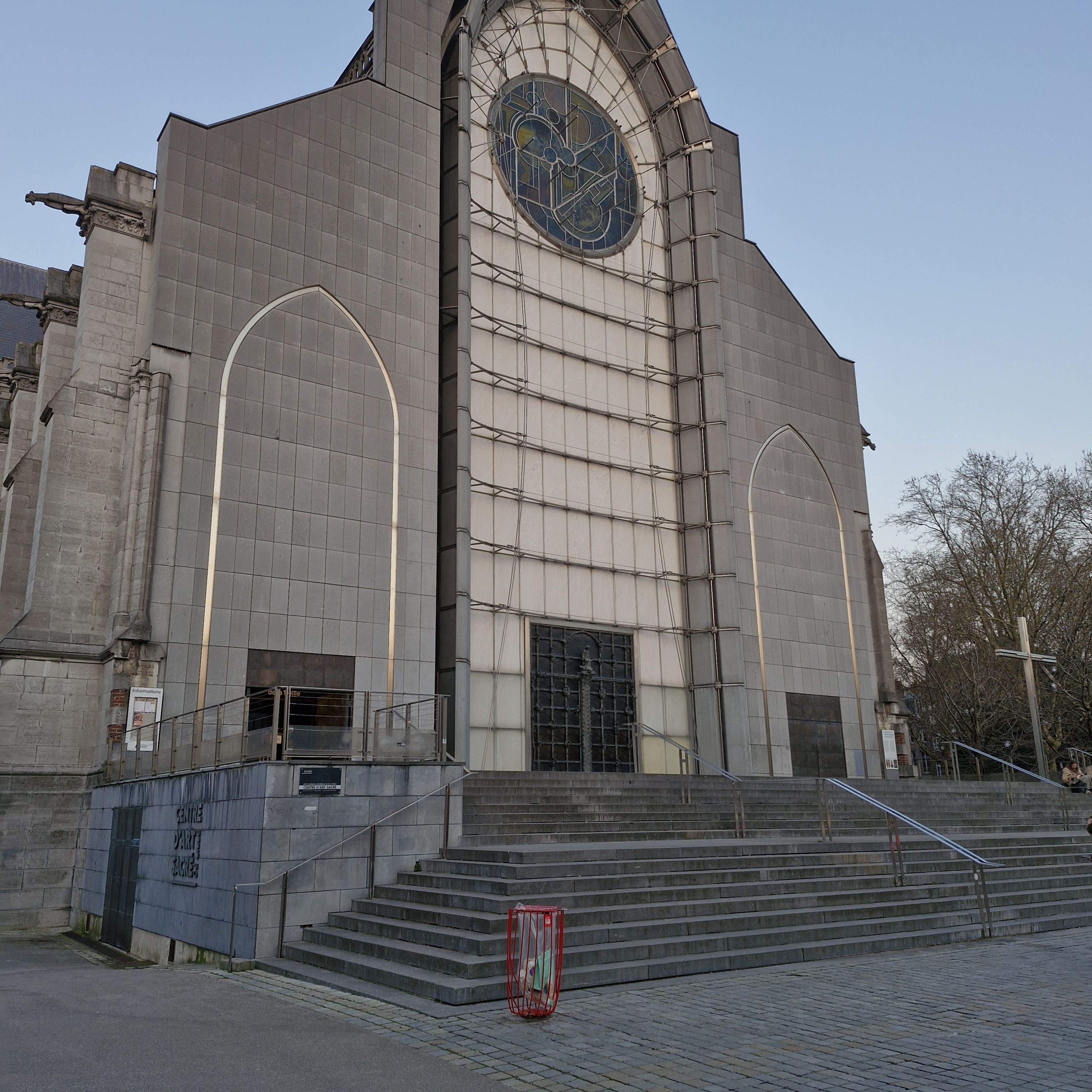
it was easy to walk from the Lille-Europe station into the centre of the city where we stayed in a hotel near to the second major station Lille-Flandres. Once the bags were dropped at the hotel we were free to explore and headed for the the older part of the city. The Cathedral of Notre-Dame-de-la-Treille (pictured below) is in this area. Building of the cathedral began in the second half of the nineteenth century but it has many modern features, including a front wall made of thin sheets of marble which, when viewed from the inside shed a soft creamy light into the interior,
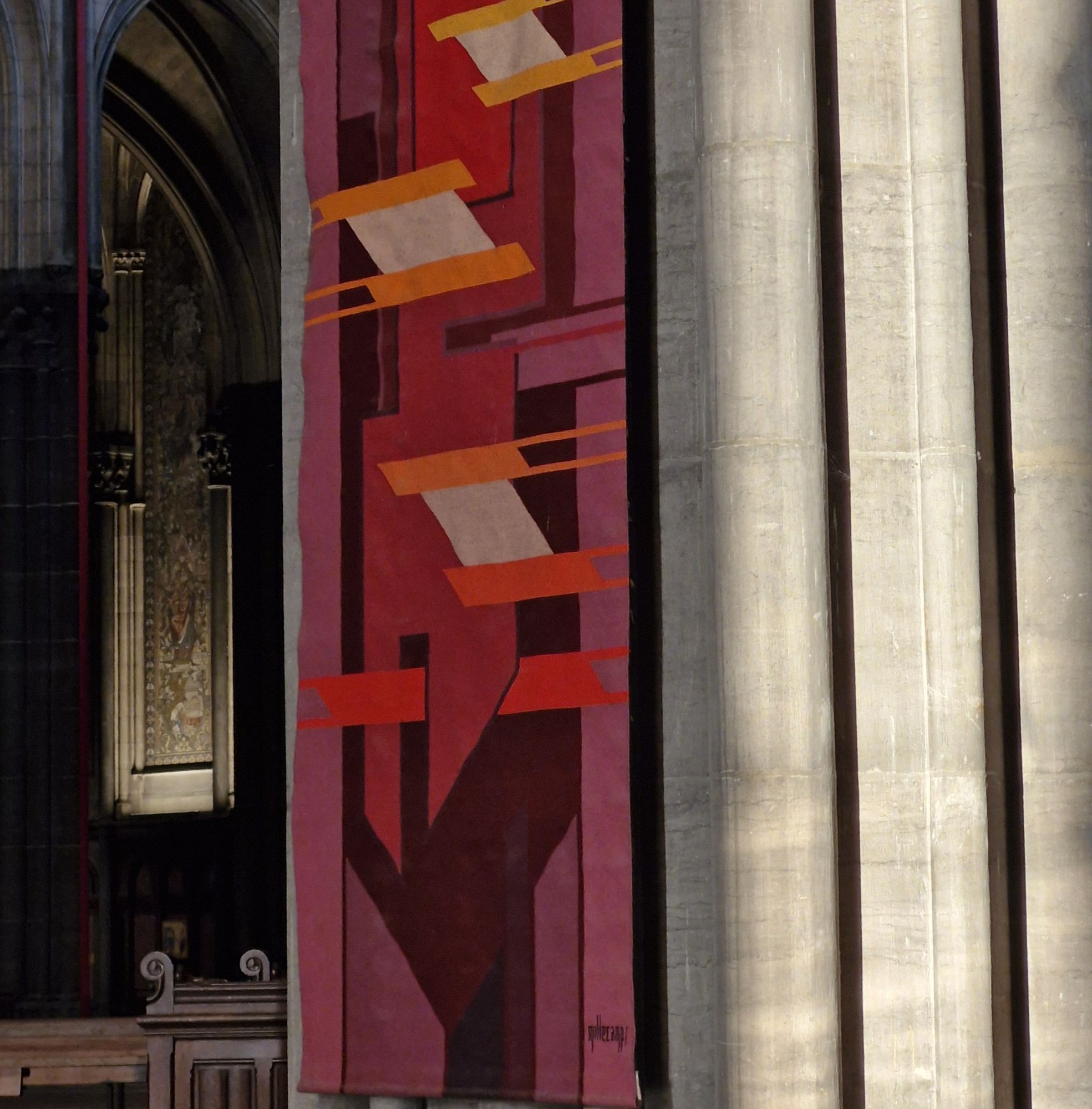
There were several modern elements in the area around the altar, including a very striking textile hanging, seen below right. This is a tapestry by Yves Millecamps (1998), inspired by the account of disciples meeting the risen Jesus on the road to Emmaus, at first not recognising him, but later saying to each other ‘Didn’t our hearts burn within us when he spoke about the scriptures’.
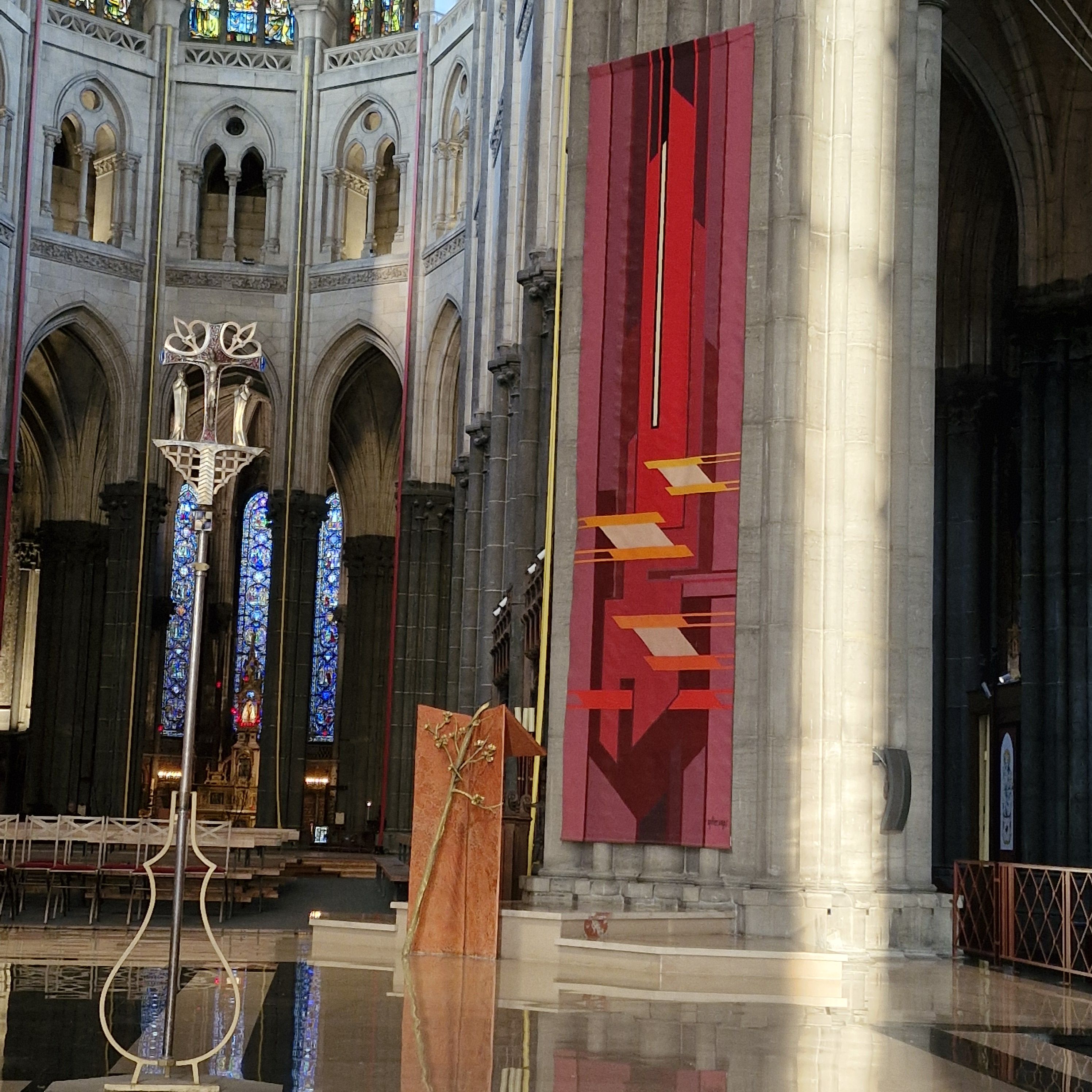
When we first arrived sun was streaming onto the piece, lighting it up, which looked very striking. These photos, taken later, show the colours better, however. This is a detail:
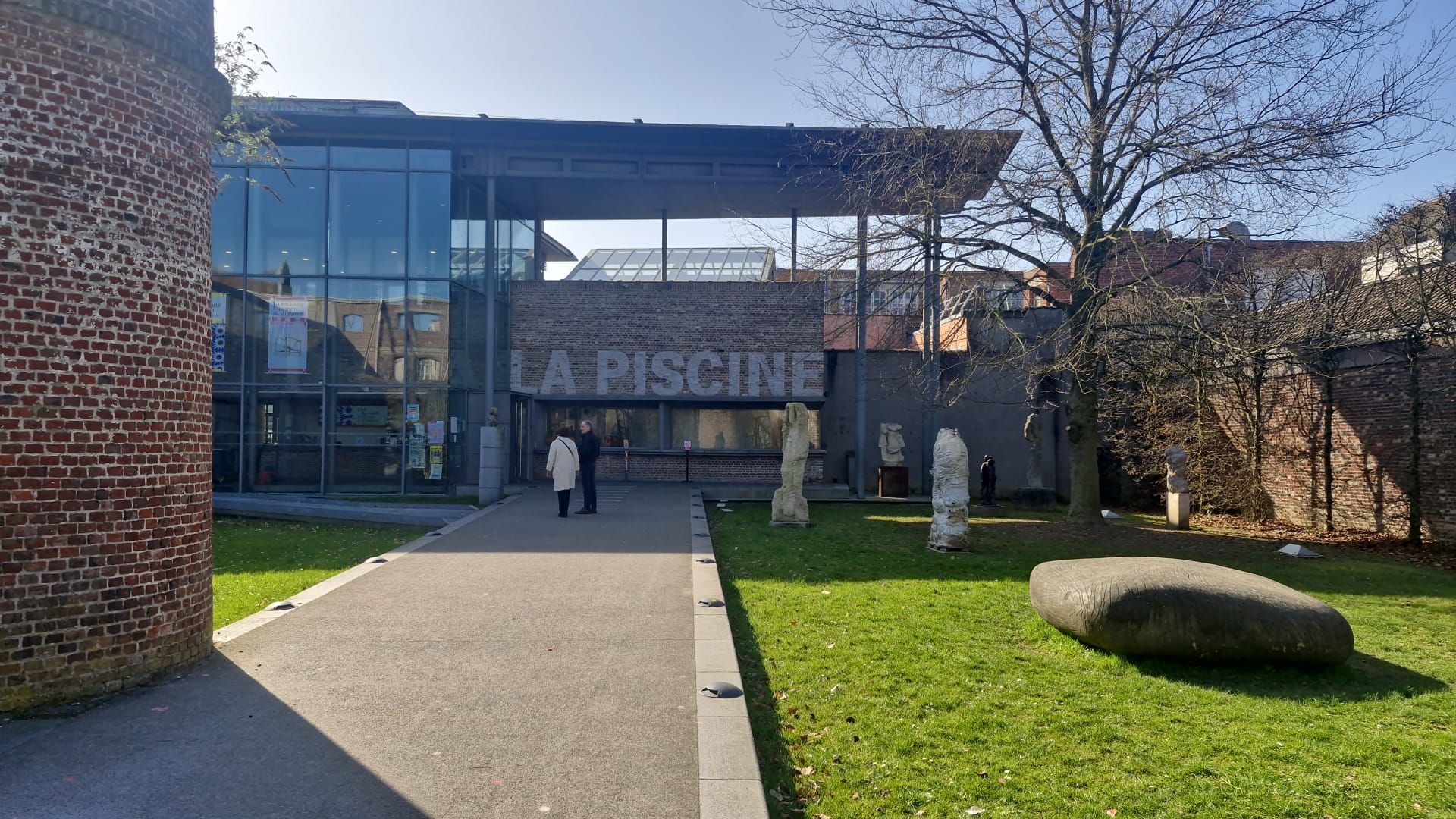
A side trip to Roubaix on the outskirts of Lille, allowed me to visit a most remarkable art museum, set up in a former swimming pool. This is the outside:
Within, the pool itself has been retained, with fountains pouring water continually as you walk alongside the pool to see the statues on display:
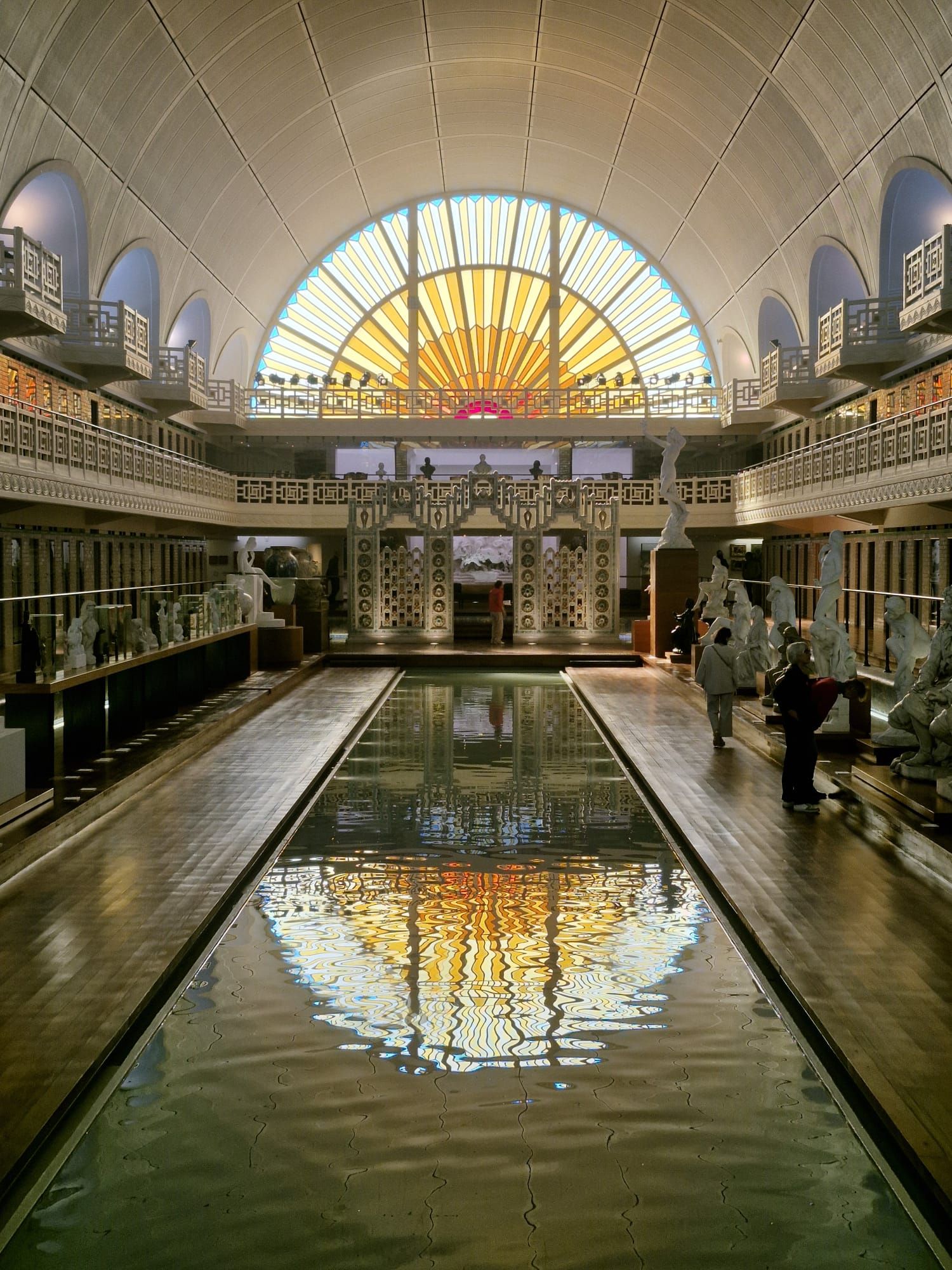
Along the sides beyond the statues the changing rooms have been retained and made into display spaces for artworks, sculptures and textile items, including various swimwear articles from different periods.
There were many interesting items to see, including a large selection of paintings and many ceramic pieces including a collection of large decorative plates by Picasso. Sadly the upper exhibition space dedicated to textiles was being set up for a new exhibition, so access was not allowed. I shall just have to go back,,,
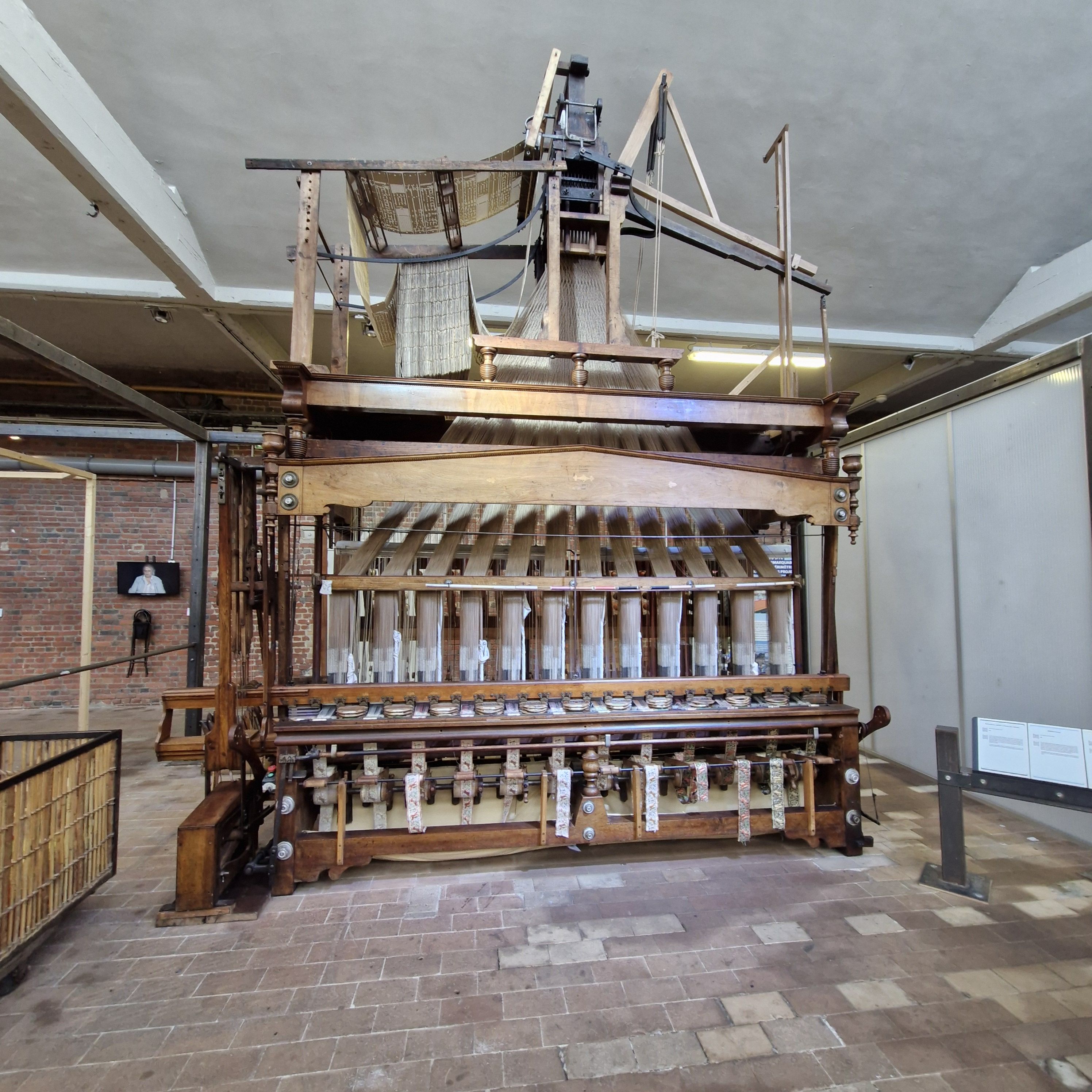
Also in Roubaix is ‘La Manufacture’, a museum dedicated to the textile industry which once dominated the area. Various looms are on show from a hand-operated frame to enormous machines which operated using a shuttle going to and fro at dizzyingly fast speeds – each improvement of course reducing the workforce until the factory itself closed in the 1990s.
Below is a nineteenth-century loom for the making of ribbons!
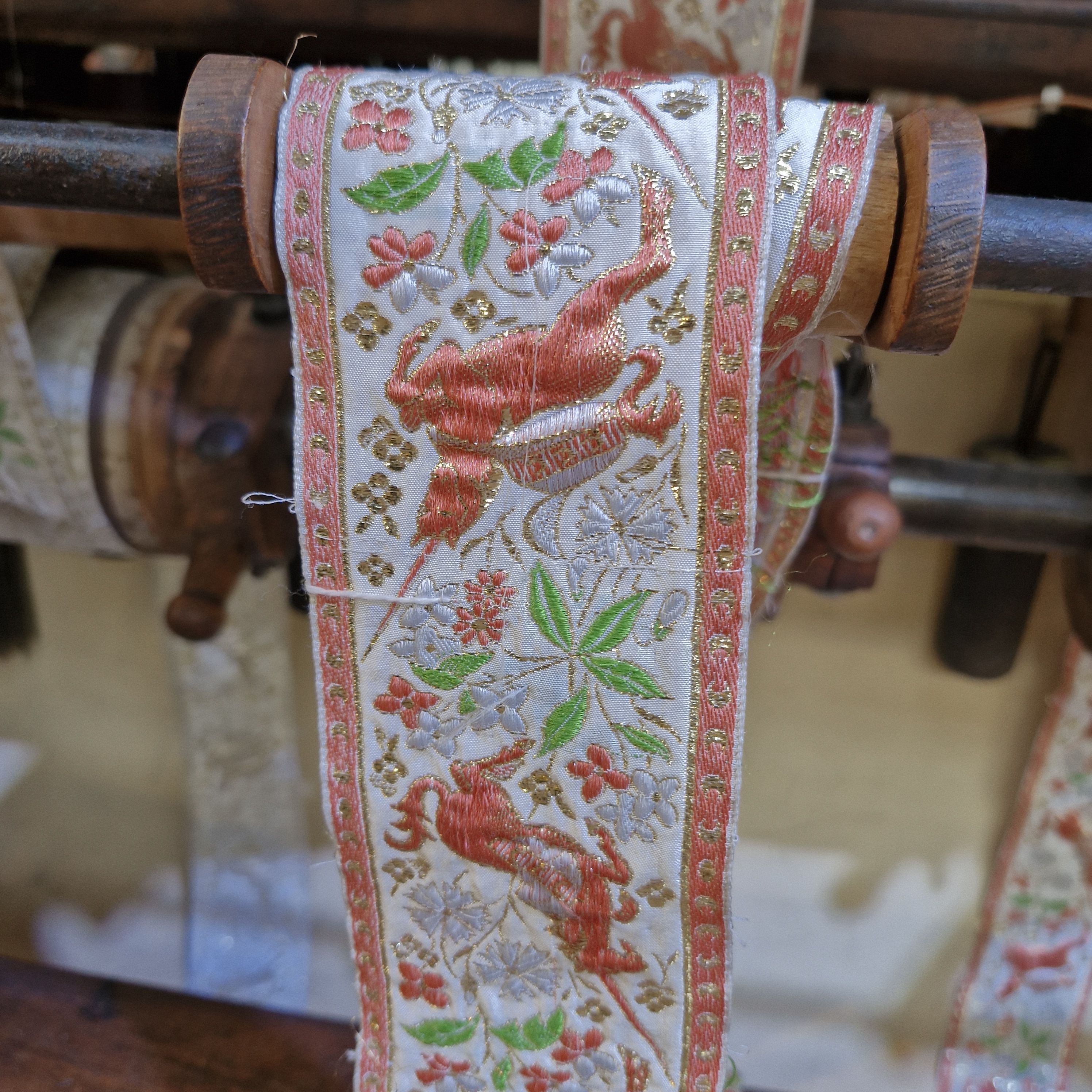
Here is a glimpse of one of the ribbons produced:
The final morning was spent wandering through the older part of the city enjoying looking in the windows of the many independent shops and even visiting the vintage shop selling second-hand clothing by the kilo!
Thank you for reading my blog. Click the blue ‘FOLLOW’ button to get a blog-post by email each Monday.
Buy the ‘Sewing Machine Cover’ pattern and more than sixty other Quilt and Sewing patterns here
Order the quilt labels fabric and more than a hundred other Fabrics here,

Book the ‘Quilt in a Day’ class and other classes here
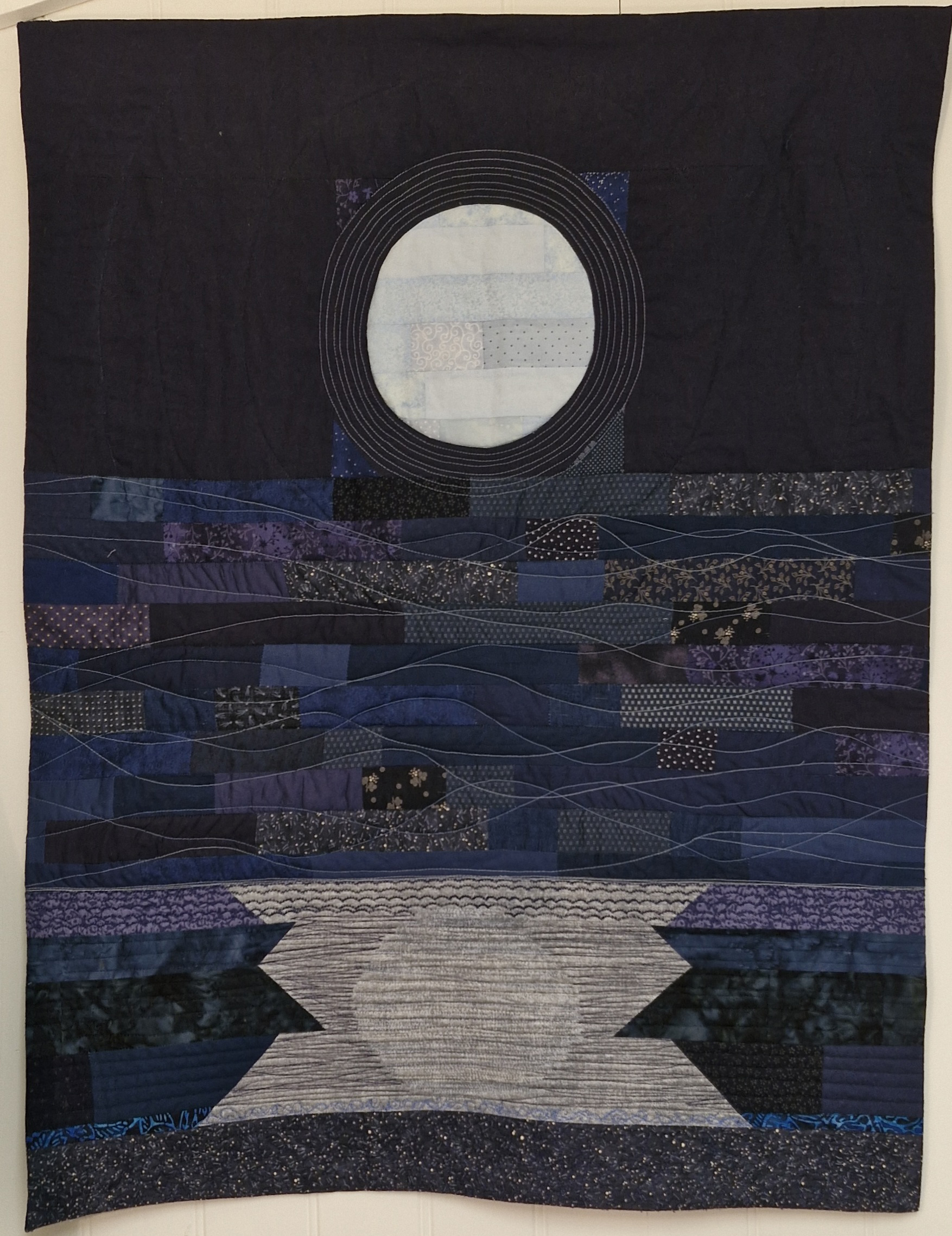
Find Art Quilts like ‘Blue’Moon’ and other quilts for sale here

Get your own copy of the monthly Newsletter (containing inspiration and information to encourage your own creativity) by signing up here
 Amanda Jane Textiles