
Recently, I visited The Foundling Museum whilst on a two-day trip to London. I was eager to visit as I had heard about it from various sources. Two novels that I read last year centred around one of the protagonists being left (as a baby) at what was then the Foundling Hospital. I also listened to one of Haptic and Hue‘s excellent podcasts on the Foundling Museum (‘Podcast #29 Fabric and Foundlings). See the link at the end of the post for more details.
From each of these, I learned that from the 18th century, mothers who were unable to care for their babies could apply to the Hospital for the care of their child. Not every baby was taken in but for each of those who were. a register was kept with the mother’s and the child’s name and a ‘token’ was left at the institution. so that if – at a later date – the mother could come back to reclaim her child, the correct identification of the token would ascertain the rights of the mother. The child itself did not keep its own name; it was given a new identity so the tokens were very important.
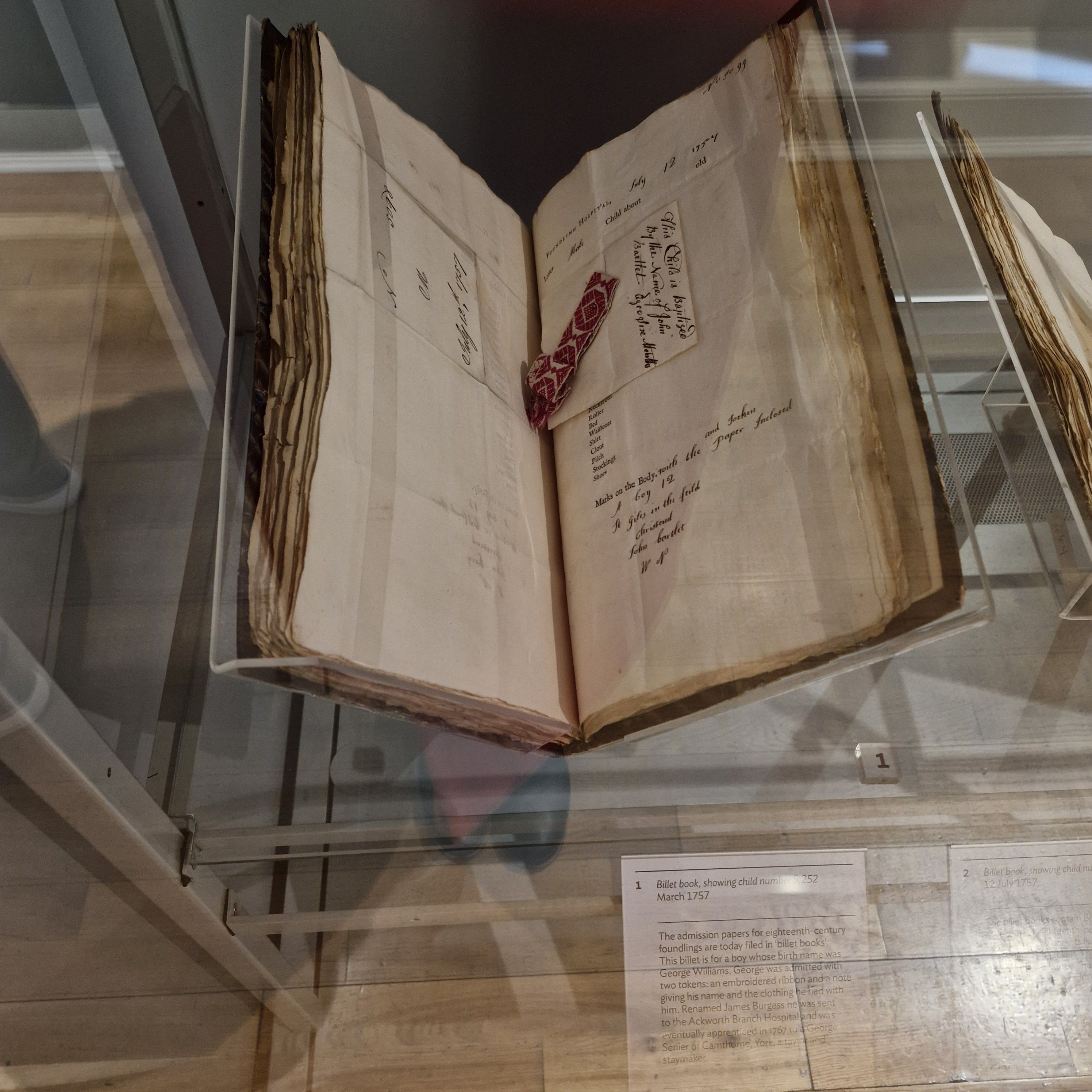
Often, the token was a piece of cloth which was cut in two, one half going into the register and one retained by the mother. Below is a register with just such a scrap of fabric:
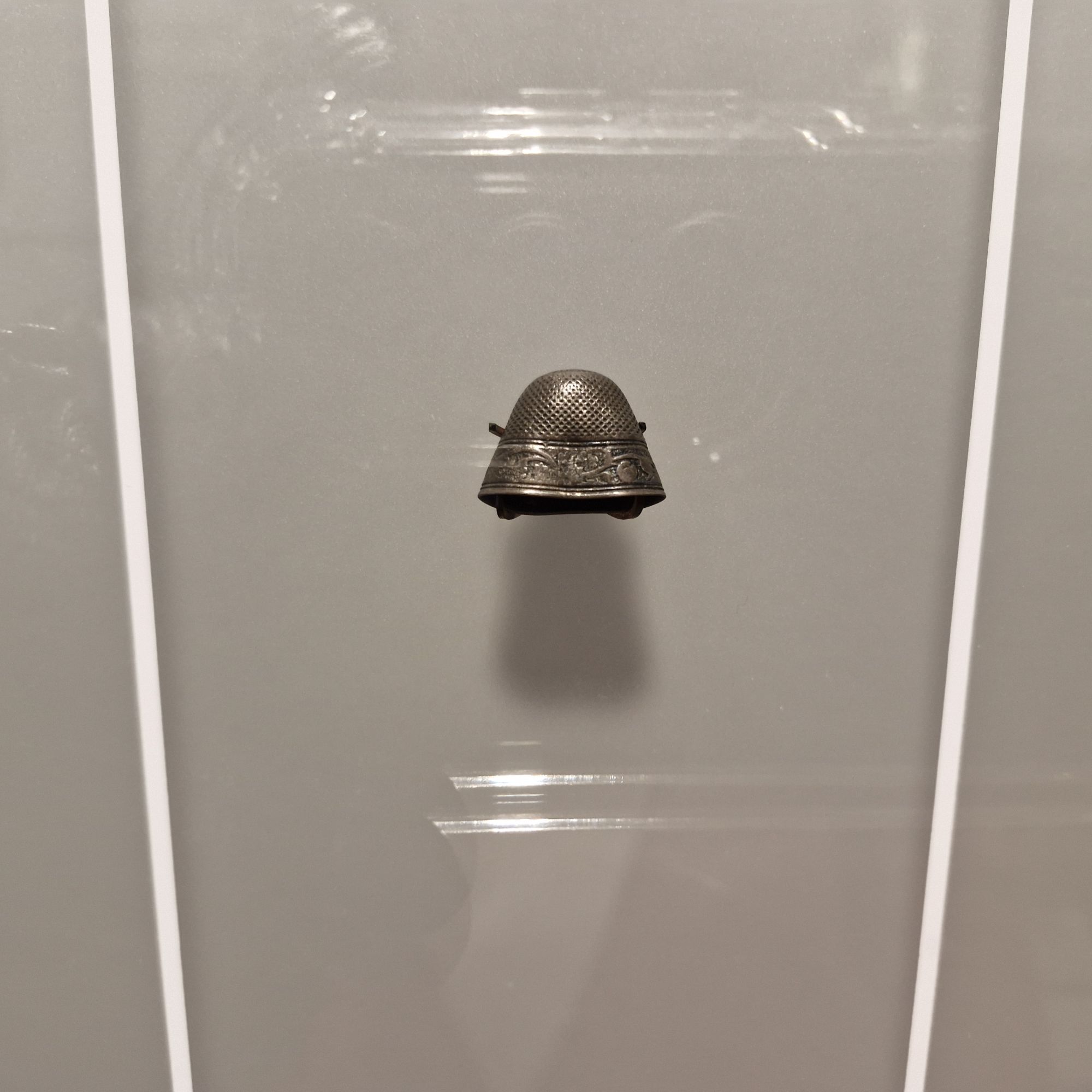
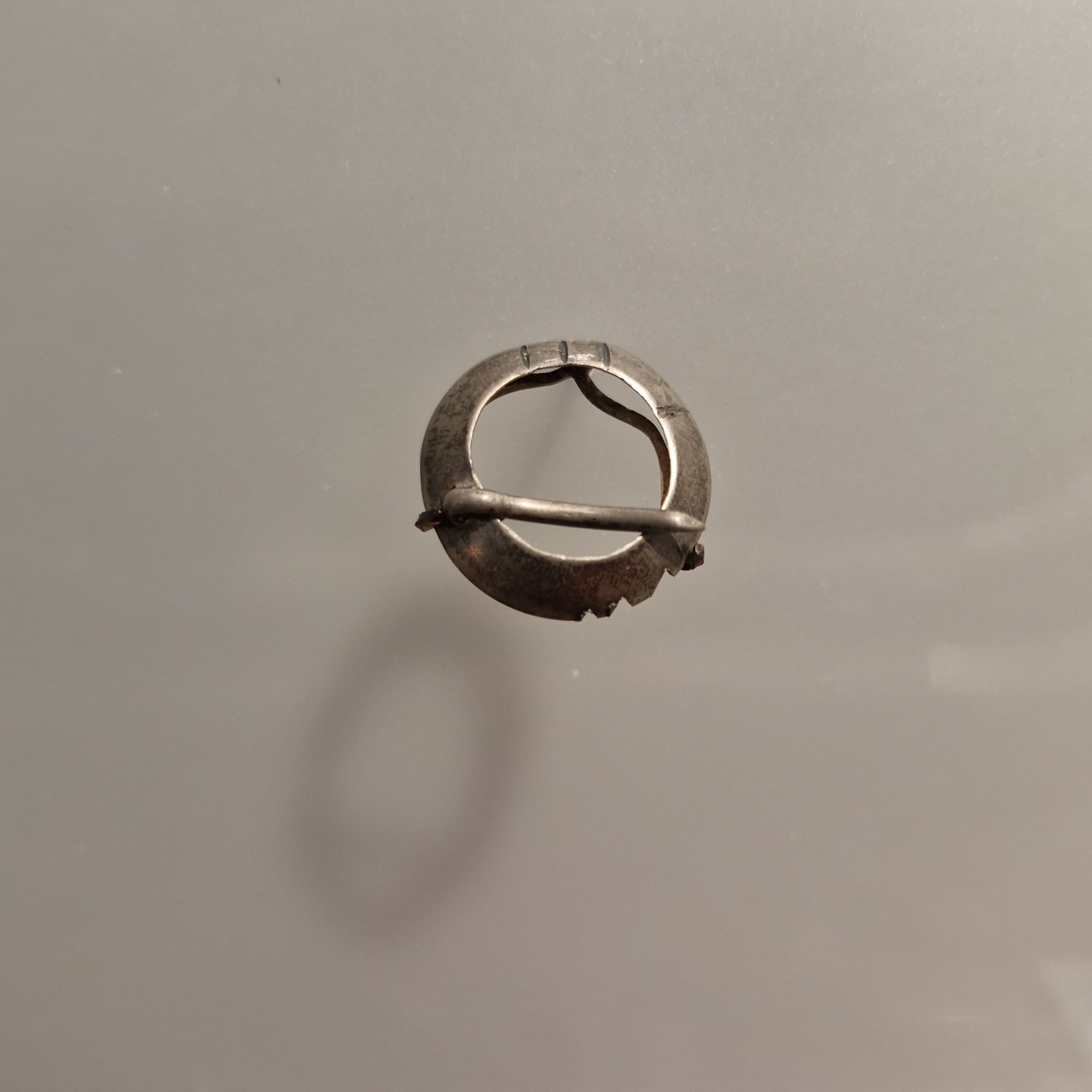
At one time, some of the historic tokens became separated from the documentation for the child. Later, conservation work was done to re-unite them. Some tokens remain today without identification and these are on display. Several of them have textiles connotations:


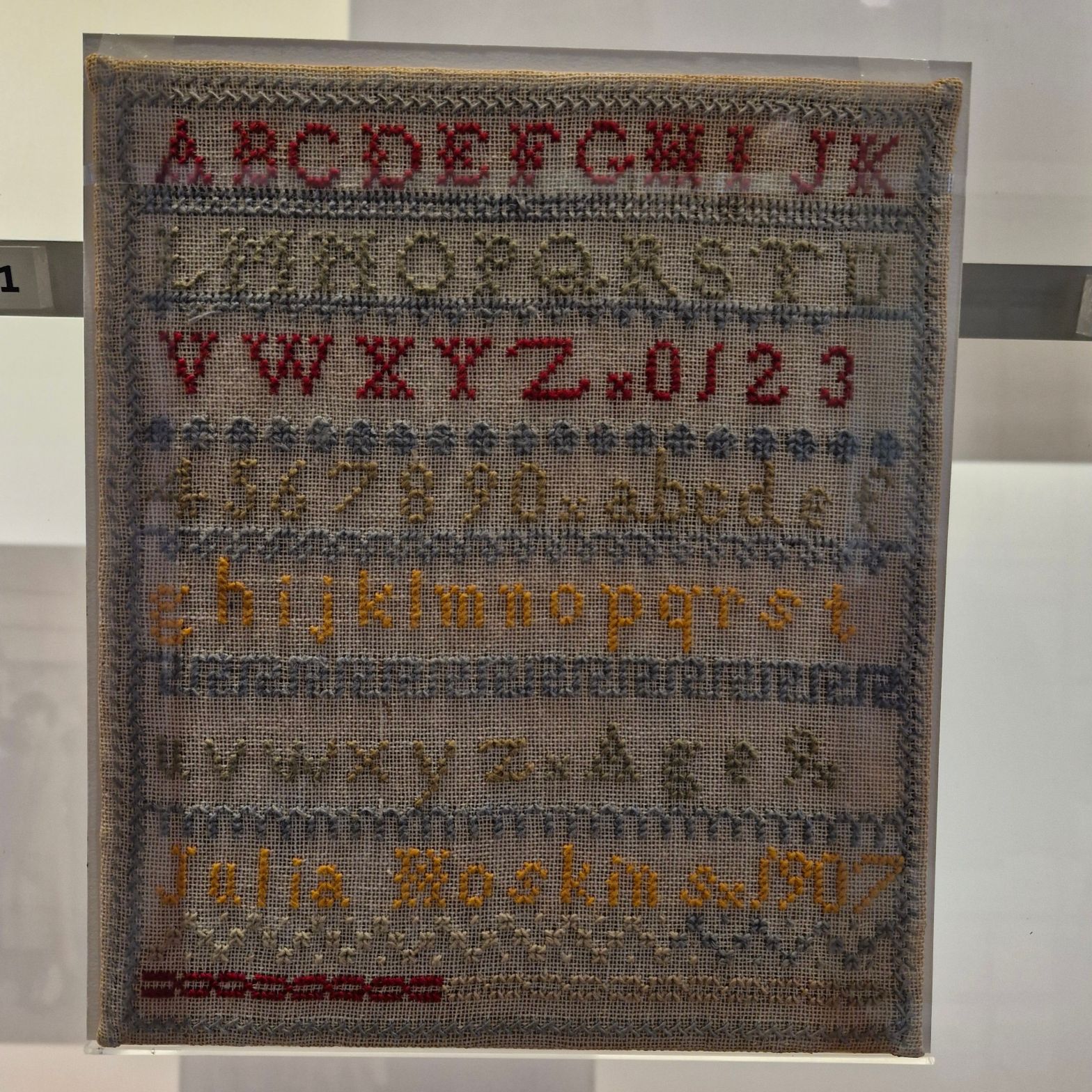
The children were educated to be able to make their own way in the world, so were taught useful skills, including needlework – for the girls. There was a sampler on display:

Nowadays The Foundling Museum exists to ‘celebrate people who have been in care, and all those who care for them’. At its institution, it was supported by leading 18th-century artists and musicians, notably Handel. Nowadays. there is an arts training programme with young people who have been in care. In the museum, there are a number of artworks to see and there are temporary exhibitions also.
Perhaps my favourite artwork was this charming automaton. Twenty pence in the slot set the musicians playing!

Find the Haptic and Hue podcast episode here: https://hapticandhue.com/fabric-and-foundlings/
You can visit the Foundling Museum at 40 Brunswick Square, London WC1N 1AZ between 10.00-5pm Monday to Saturday and 11.00am – 5pm on Sunday.
email: enquiries@foundlingmuseum.org.uk
Thank you for reading my blog. Quilt Patterns are here, Fabrics are here, Classes are here
Click the ‘Follow’ button to get a blog-post by email each Monday and click here if you would like the monthly newsletter with design and colour inspiration, etc.
This quilt pattern is for a sampler quilt – to make a cot-sized quilt, wall-hanging or throw. Each row has a different block and it is suitable for beginner quilters. More experienced quilters can adapt the pattern to make a larger quilt by increasing the number of blocks. Get the pattern here
 Amanda Jane Textiles