
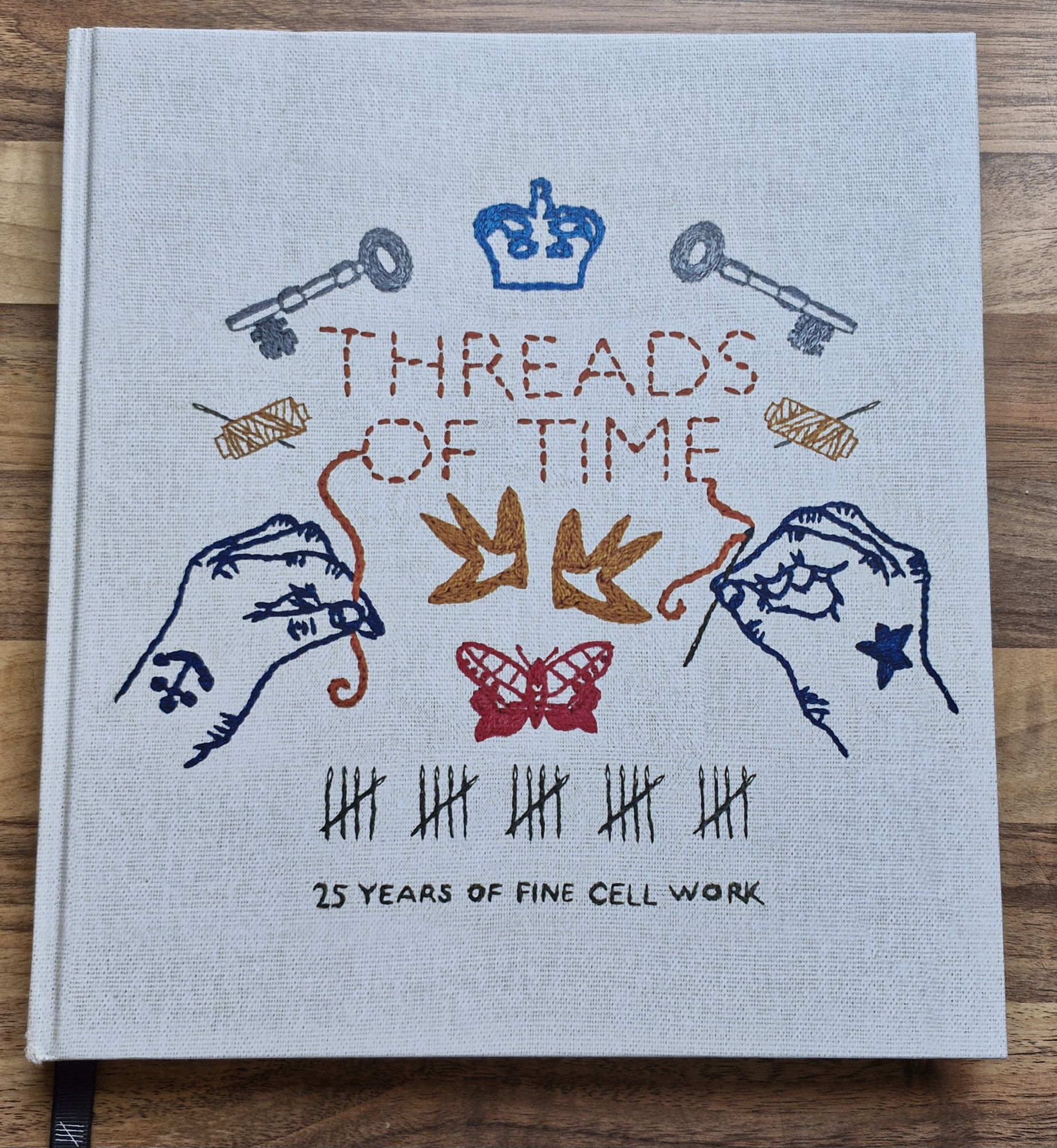
I recently purchased a copy of the book ‘Threads of Time’ which was published in 2022 to celebrate the 25th anniversary of the charity Fine Cell Work. It was published by 26 Characters Ltd in Association with Fine Cell Work.
For anyone interested in Textiles, this book offers examples of exquisite work: in embroidery, in needlepoint and in quilting. The colour photographs of the textile pieces are astonishing. Twenty-five textile products are included in the book. For each of the featured pieces, the accompanying text is even more surprising because it tells the story of how the piece was designed, how it was made (often in separate pieces which were later joined together to make the whole) and what the destination of the finished product was. Most impressive of all are the comments interspersed throughout the book, made by the stitchers themselves.
The story of how the charity ‘Fine Cell Work’ came to be, is included in the book. This is the way the charity describes itself:
A charity committed to the rehabilitation of people in prison and prison leavers
Fine Cell Work enables people in prison to redefine themselves, inspiring and empowering them as they strive to rebuild their lives and non-criminal identities.
There are no other charities or organisations providing paid, professional, high-quality craft opportunities to people in prison.
Since 1997, we have been helping people to see what they are capable of, offering them hope for a different future, through the medium of needlework
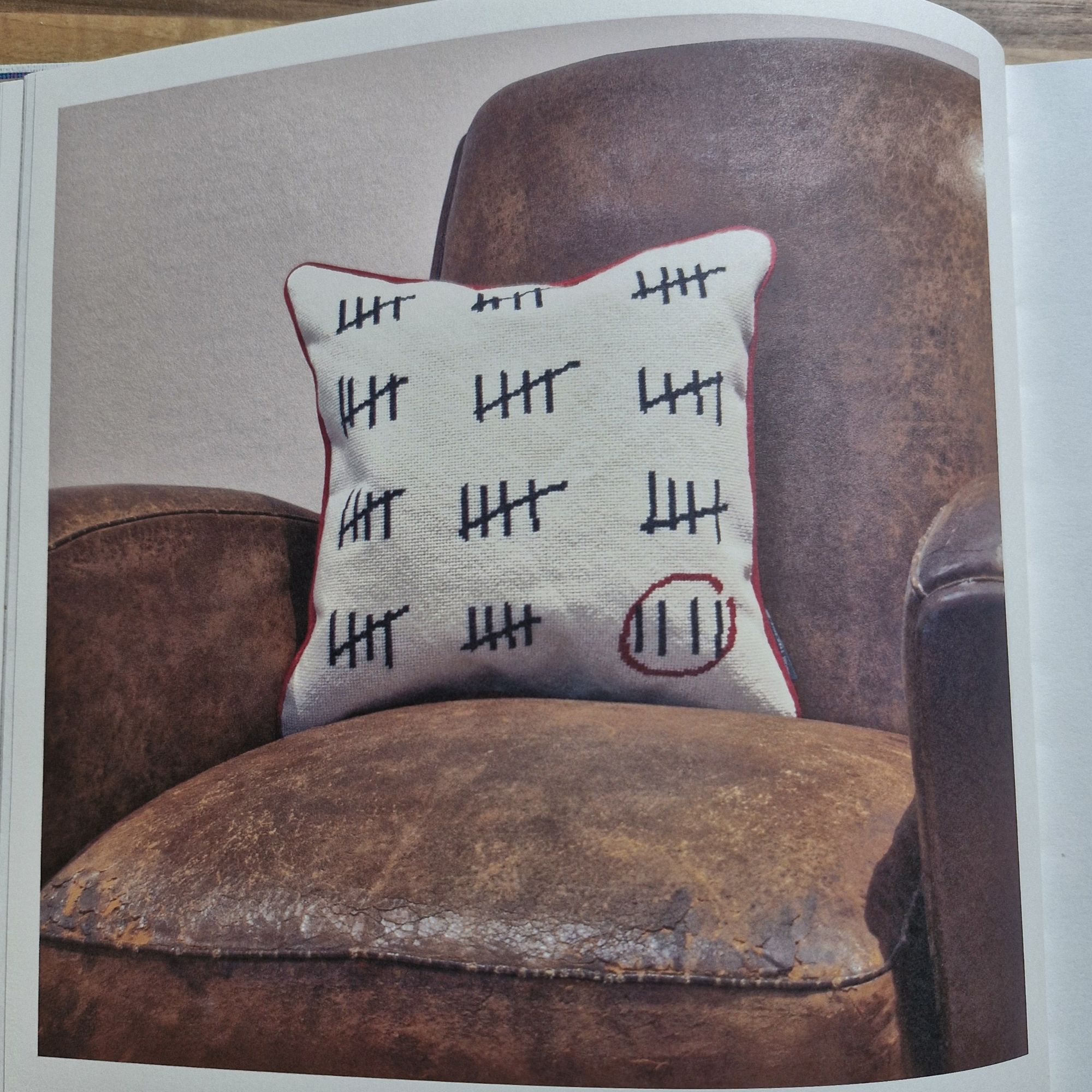
One of the products included in the book is a needlepoint cushion with an improvised calendar – four strokes crossed through, representing five days – which was designed by A A Gill.
A particularly sophisticated example of needlepoint is the portrait of the late Queen Elizabeth II. It is based on a photograph taken in 2002. The piece below is in fact produced with thousands of tiny stitches!

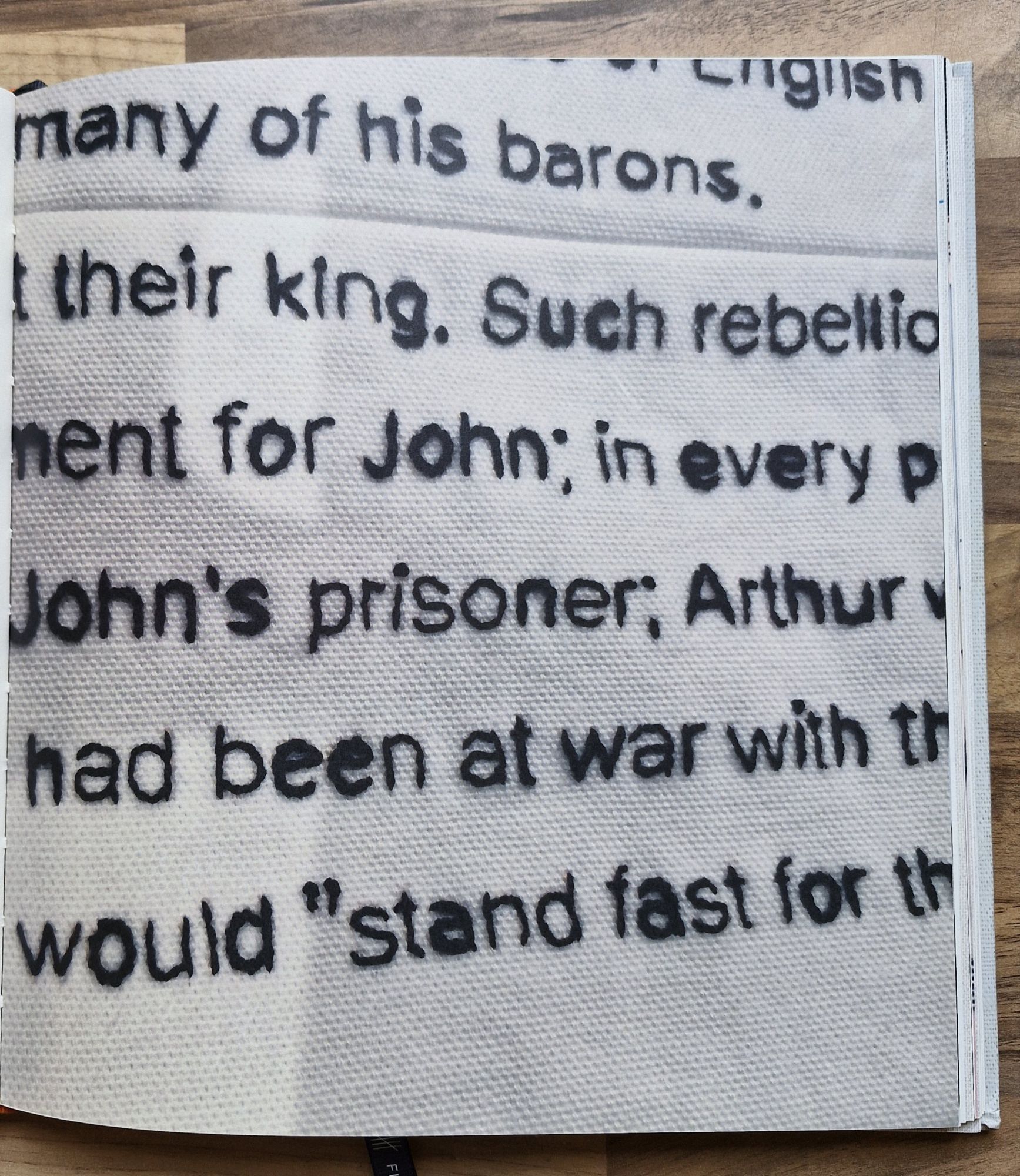
I also remember seeing on display a reproduction in stitch of the Wikipedia entry of Magna Carta, which was stitched in part by Fine Cell Work stitchers in 2014. The whole embroidery was 13 metres long. It was produced in pieces.
Included in the book, is a close-up of part of the work to give you some idea of how detailed and intricate the hand-stitching needed to be to replicate the Wikipedia page.
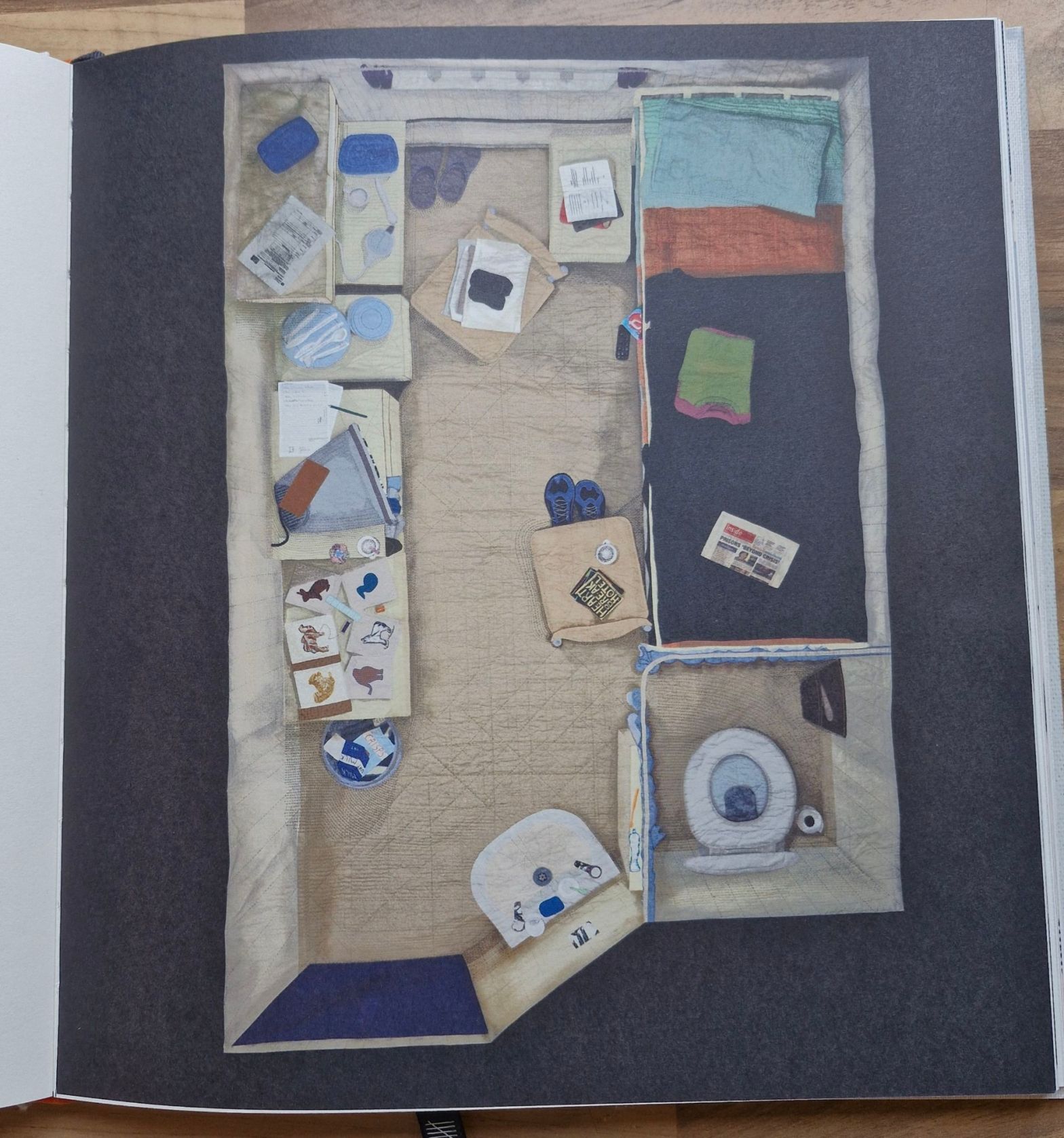
There are also some amazing quilts in the book. Firstly, there is a group quilt depicting a prison cell, which includes the items on the table, left, for producing squares for a quilt.

The quilt below is one of four commissioned from Fine Cell Work by Michelle Curran to commemorate her husband Neil. The quilts were all made from clothing belonging to him and they included the Ohio star block as shown below.
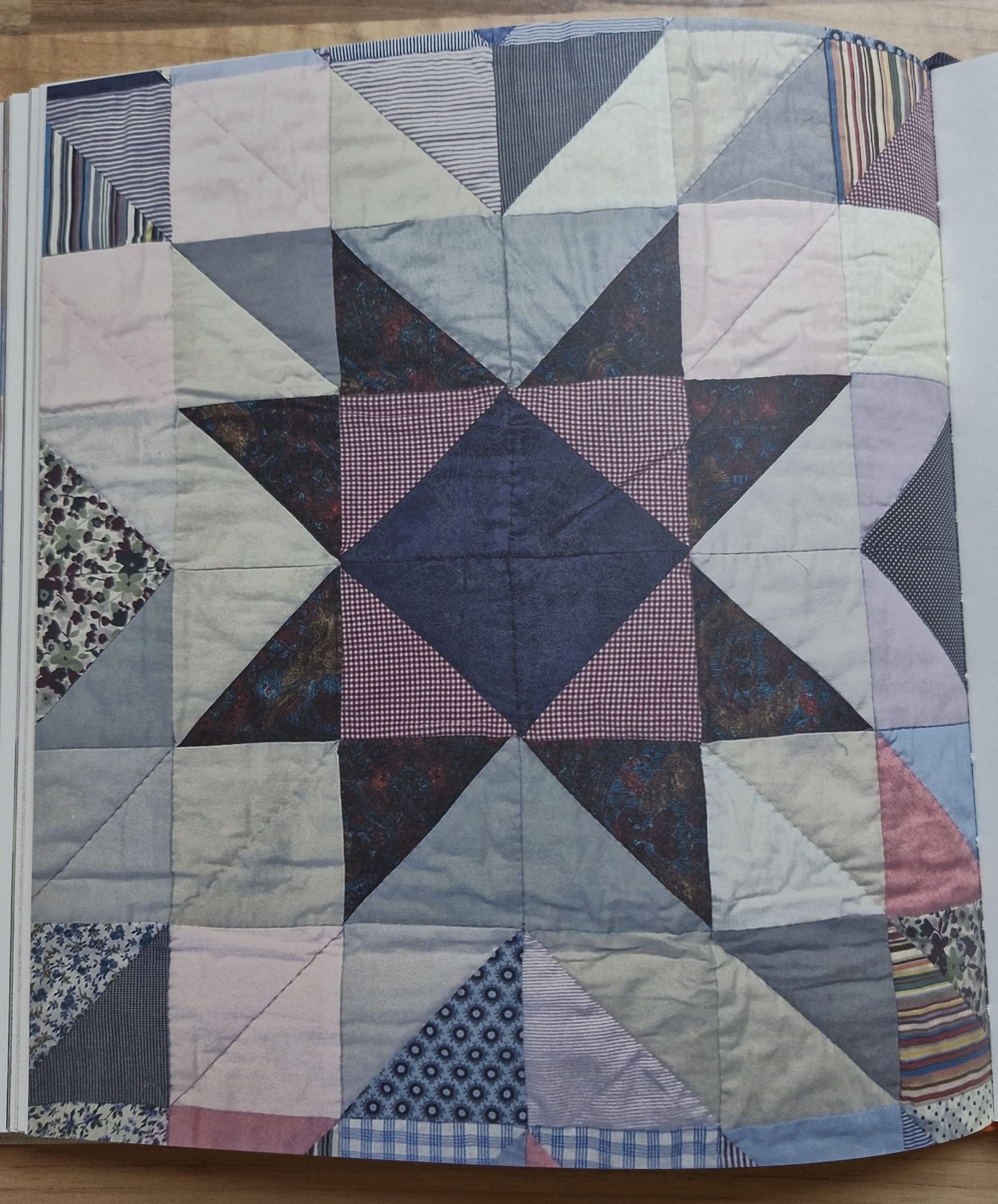
Perhaps my favourite is the stunning quilt below made by Joseph. It is hand-pieced, hand-quilted and hand-embroidered.

To find out more about this surprising, enterprising and compassionate charity go to:
https://www.finecellwork.co.uk
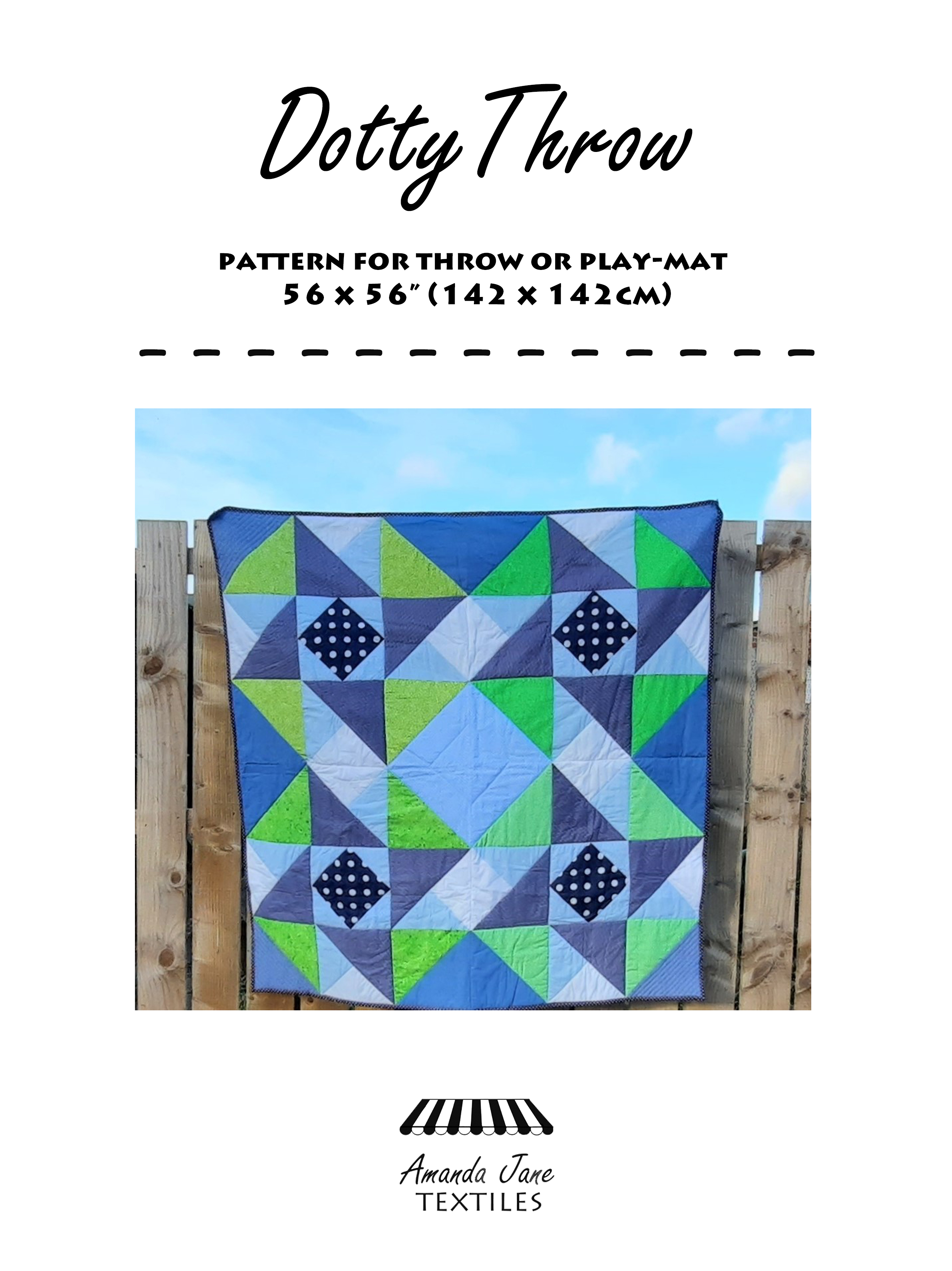
This quilt pattern makes a bold throw, play-mat or wall-hanging. Get it here
Thank you for reading my blog. Quilt Patterns are here, Fabrics are here, Classes are here
There’s a great monthly newsletter full of design and colour inspiration, plus textile news of all kinds – click here if you would like to get it.
Click the ‘Follow’ button to get a blog-post by email each Monday.
 Amanda Jane Textiles