
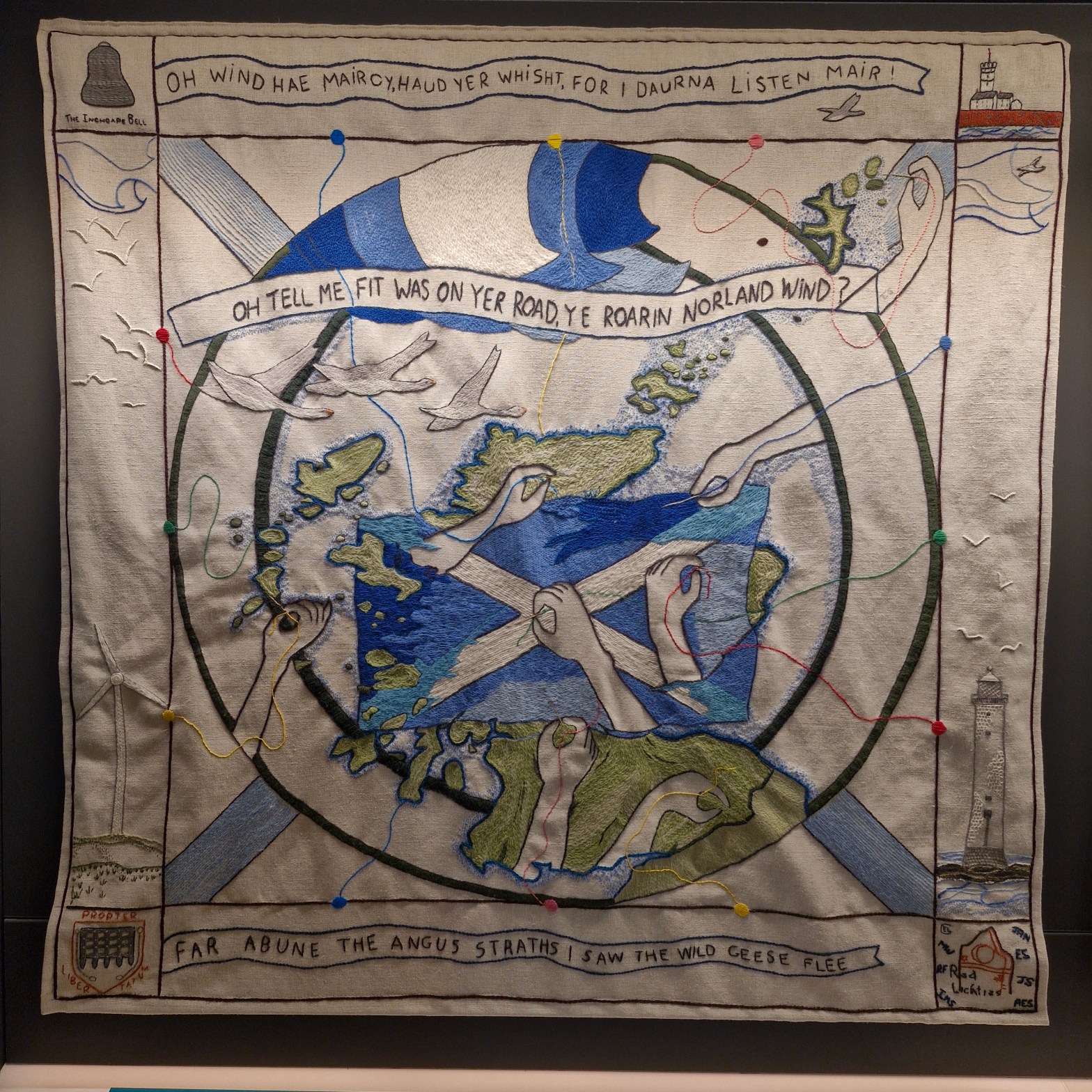
Recently, I made a special trip to see ‘The Great Tapestry of Scotland’. Located in Galashiels, in the Scottish Borders, it meant quite a journey (made in several stages) from my home in Ramsgate in the South-East of England!
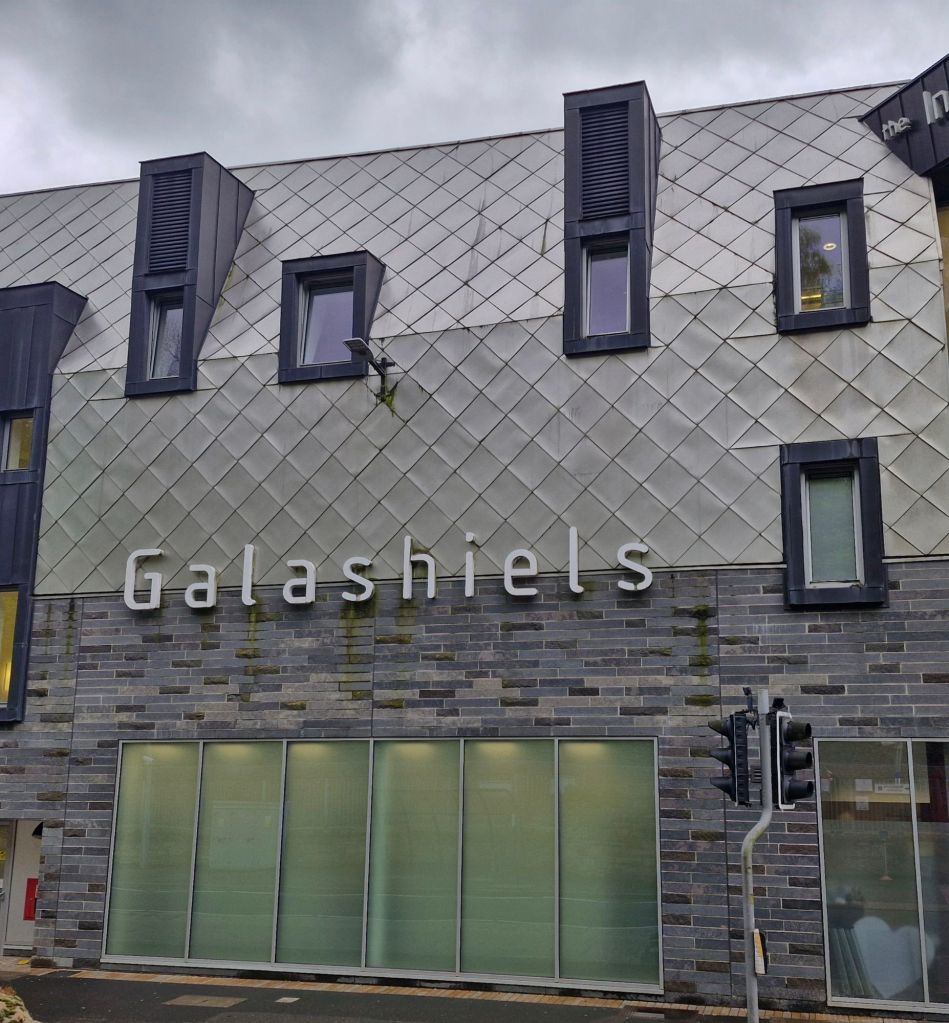
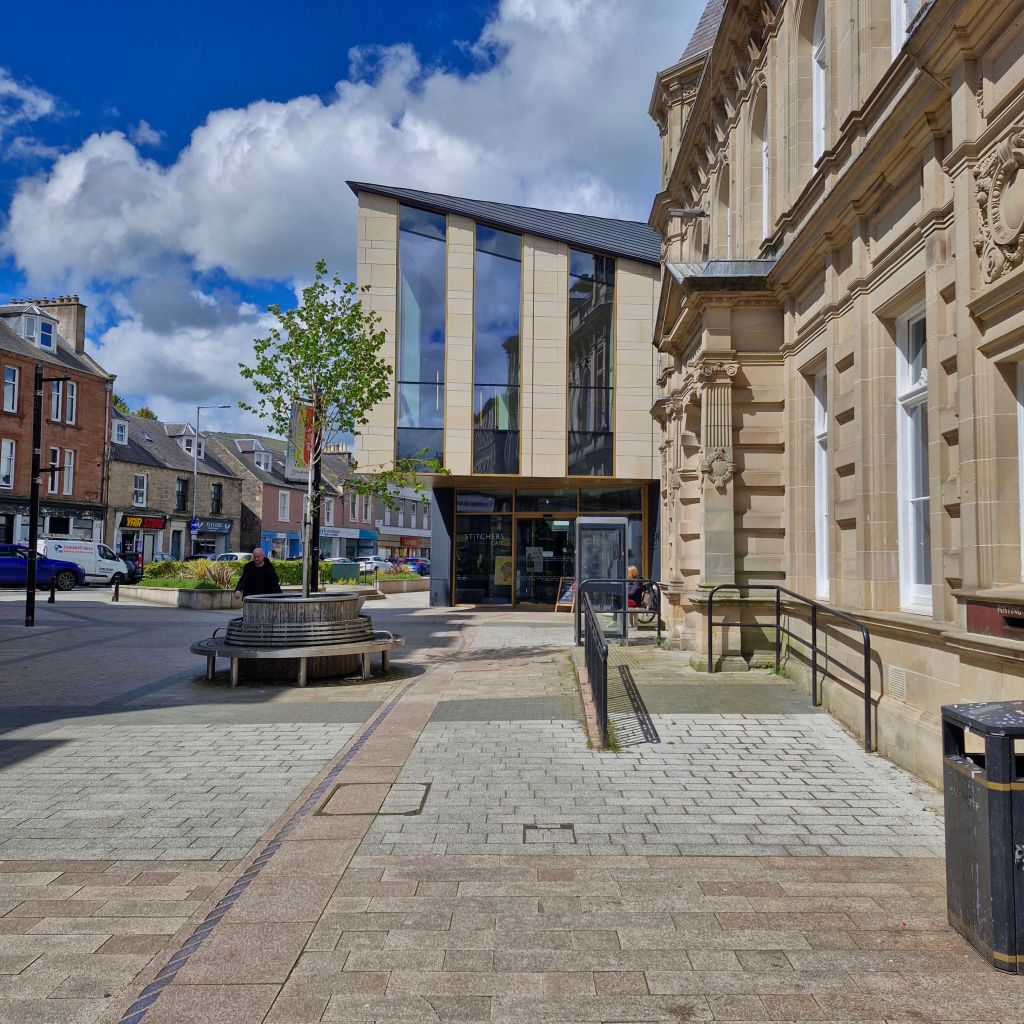
Galashiels, had a long association with textiles, especially with the weaving of wool although the mills have sadly now gone. It is exciting that a new museum has been designed and built to house ‘The Great Tapestry of Scotland’.
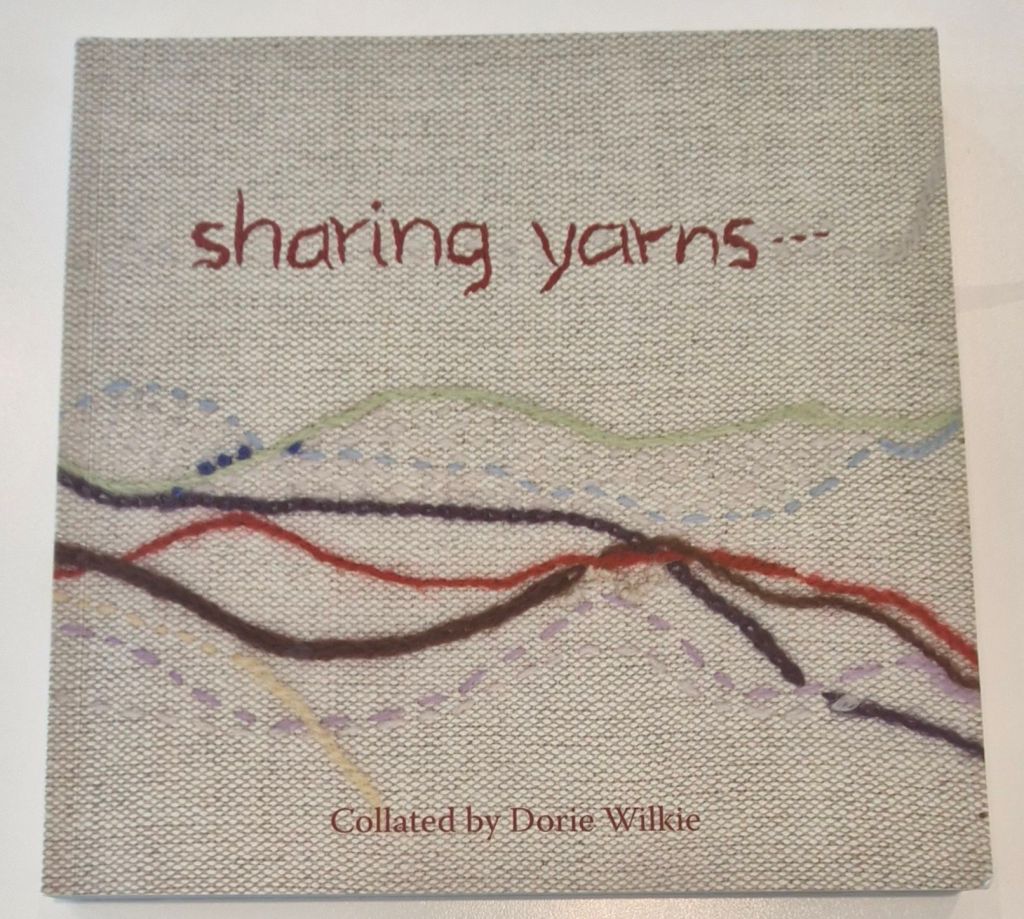
Fortunately, prior to my visit, a friend had lent me ‘Sharing Yarns’ collated by Dorie Wilkie, a book which described the process of making the panels, from the point of view of the stitchers. Dorie Wilke was the coordinator of all the groups, who commented on the type of work they had done and logged the number of hours spent stitching.
This prepared me for the extraordinary richness and density of the embroidery in each of the panels that make up the ‘tapestry’. For, like the famous ‘Bayeux Tapestry’, this artwork is entirely composed of embroidered panels (not needlepoint pieces).
On arrival at Galashiels, I asked the way and the person who kindly told me which way to go, said “The Tapestry is a wonderful thing!” which was a good start.
The idea for the project was suggested by author Alexander McCall Smith. The Tapestry was designed by Andrew Crummy who had previously designed a work about the Battle of Prestonpans. This time he was asked to design a tapestry about the whole history of Scotland – no small task! There are 160 panels in all. Astonishingly, the embroideries were all completed in the period 2012-13.
I followed the advice given in the Museum to start by not looking at each one of the panels but rather doing an overview of all the panels and then coming back to look again. This I did and whilst marvelling at the beauty and richness of the embroidery stitches, I was also amazed by the cohesion of the colours and design between all the panels even though the historical context went from the geological formation of Scotland to contemporary events of note (for example, the cloning of Dolly the sheep). The faces drawn by Andrew Crummy are a strong unifying feature across the whole collection of panels.
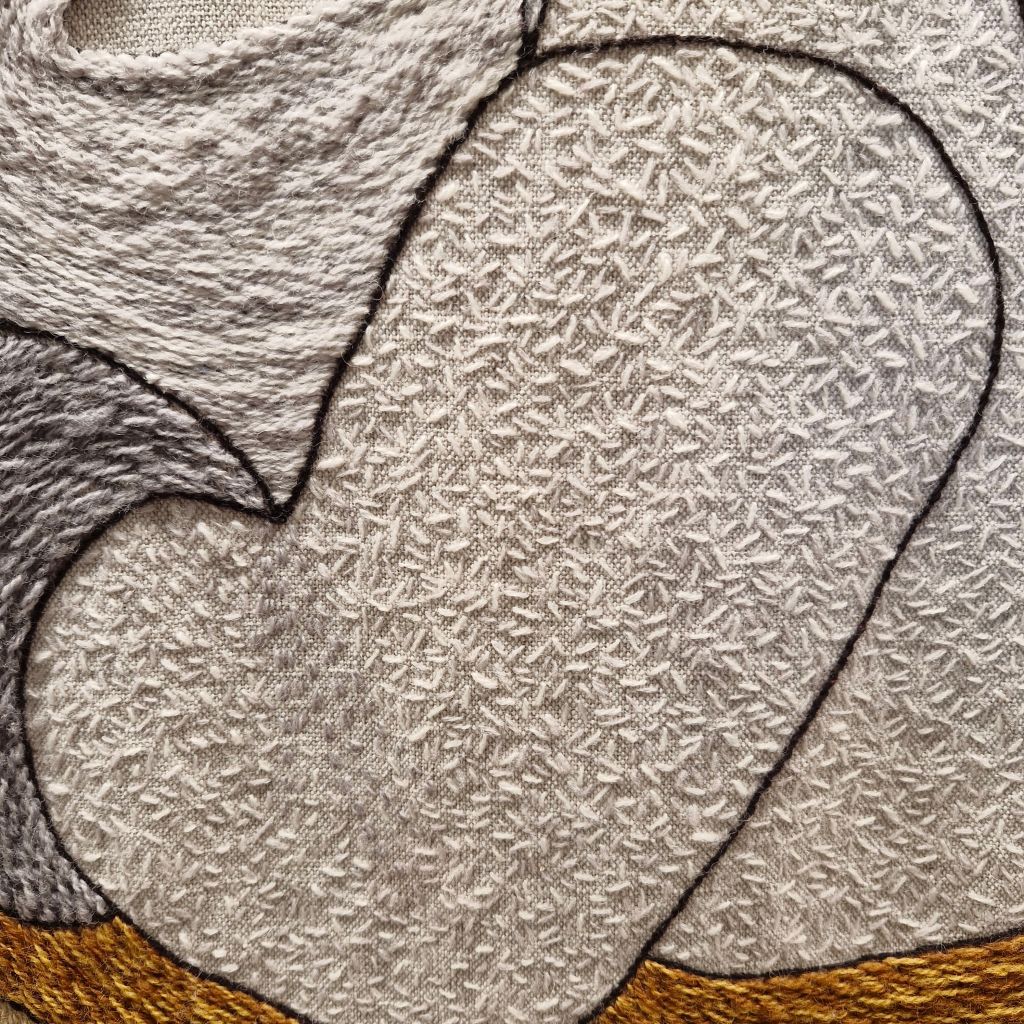
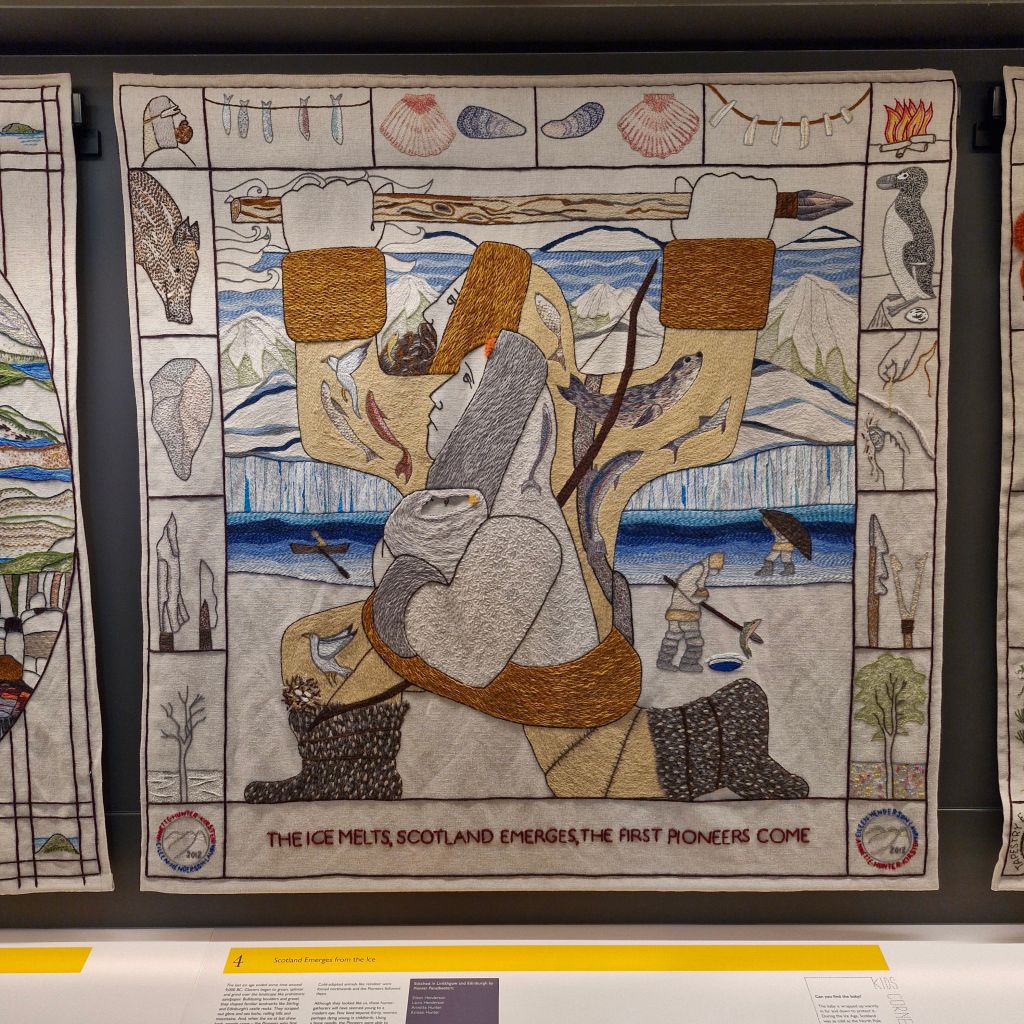
Each panel has a neutral-coloured fabric ground and the embroidery stitches are added using both cotton and wool threads. Over a thousand stitchers were involved, from expert embroiderers to hobbyists. Though the stitches may vary from the relatively simple to the very accomplished, in every panel the embroidery forms a beautiful whole. Such care has been taken to choose the most appropriate stitch. Here is an example from Panel 4 ‘Scotland Emerges from the Ice’
Here is the whole panel:
I noticed stitches used in the garments worn by the figures in the panels which gave the appearance of knitted sweaters (as seen in Panel 123 below) and woven tweed skirts. I also spotted fly stitch and split stitch made in overlapping areas, very close together to create texture and depth making a dense carpet of colour.
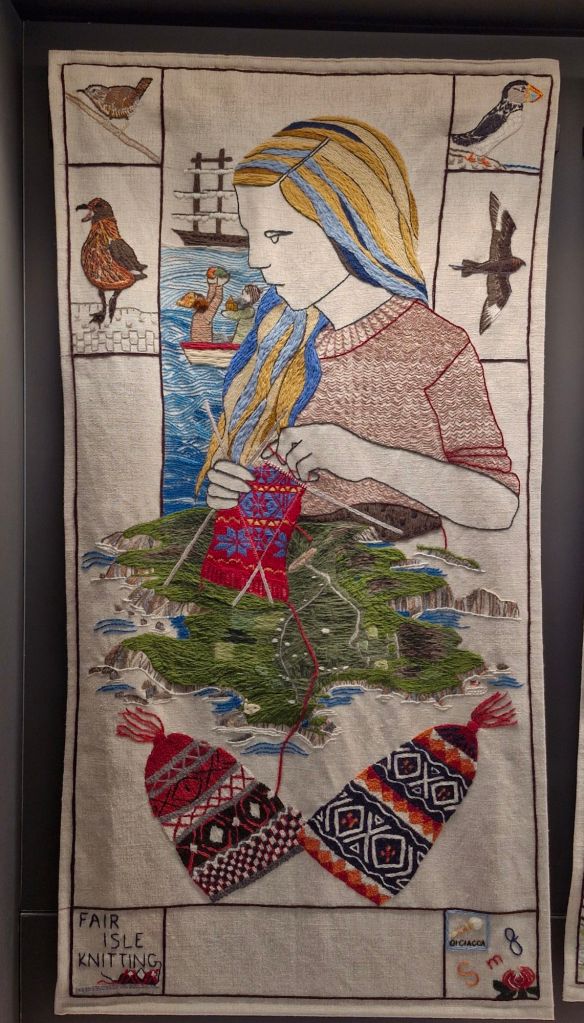
One of the delights of this museum is that the work is not under glass. You can stand with your face 6″ from the cloth and see every stitch. The museum even offers the loan of a magnifying glass to see the stitches more clearly. Small motifs are included in the bottom corners of each panel which identify the makers by their initials and personal images (as seen in the image above).
There were details everwhere to catch the viewer’s eye: for example, small stitched images of ‘Andy Pandy’ and ‘The Woodentops’ (programmes that I remember from childhood) on Panel 138 ‘Television Arrives’ – very pleasing.
This extraordinary artwork is so compelling and I highly recommend a visit to Galashiels to view it.
Click on this link to see the website for the Great Tapestry of Scotland: https://www.greattapestryofscotland.com/
Photographs are included here by permission of the Museum.
Thank you for reading my blog. Click the blue ‘FOLLOW’ button to get a blog-post by email each Monday.
Buy the ‘Sewing Machine Cover’ pattern and more than sixty other Quilt and Sewing patterns here
Order the quilt labels fabric and more than a hundred other Fabrics here,

Book the ‘Quilt in a Day’ class and other classes here
Find Art Quilts like ‘Blue’Moon’ and other quilts for sale here

Get your own copy of the monthly Newsletter (containing inspiration and information to encourage your own creativity) by signing up here
Check out the Amanda Jane Textiles YouTube channel here

